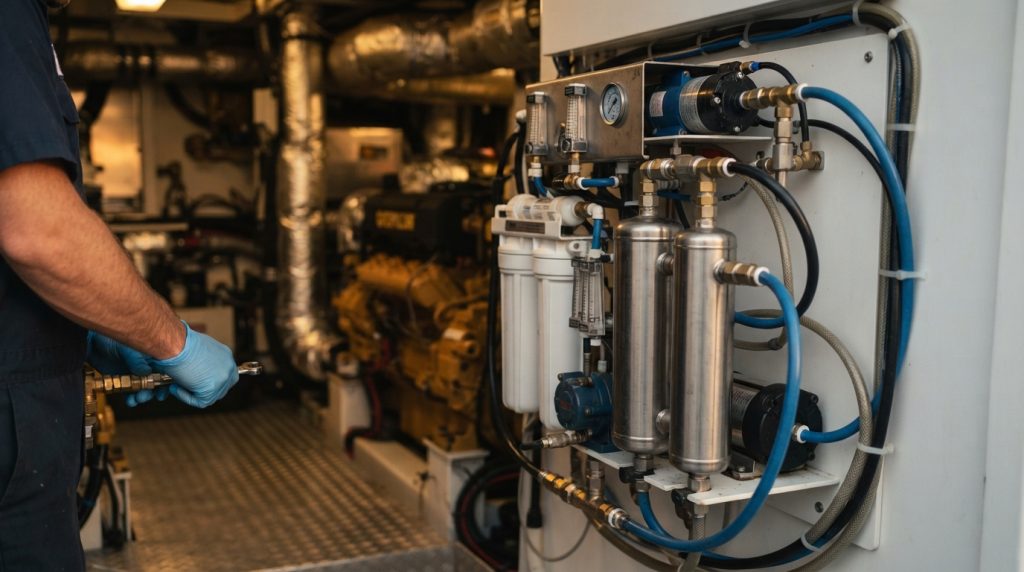
Key Factors to Consider Before Installing Desalination in West Palm Beach
Essentially: • Choosing the right water desalination system in West Palm Beach, FL requires evaluating water production capacity,...
Read article →Home / Water Purification Company / Article
At glance:
• Water filter systems range from point-of-use pitchers to whole-house reverse osmosis setups, each suited to different contaminant concerns.
• Selecting the right system depends on local water quality, household size, and maintenance commitment.
• Regular filter replacement and membrane checks keep systems performing as intended over time.
A water filter system removes sediment, chemicals, and dissolved solids from tap water through mechanical filtration, carbon adsorption, or membrane separation, depending on the contaminants targeted. Households typically choose between point-of-use filters, whole-house units, or reverse osmosis systems based on water test results and daily usage needs.
Choosing a Water Filter System starts with understanding what is actually in the water supply. South Florida’s municipal water commonly carries higher mineral content and chlorine byproducts, which influences the type of filtration that performs best in homes across the region.
Public water systems are required to meet federal limits on dozens of substances, and the EPA’s National Primary Drinking Water Regulations set enforceable maximum contaminant levels for microorganisms, disinfection byproducts, and inorganic chemicals. Reviewing a local water quality report against these standards helps determine whether additional home filtration is warranted.
Not every filtration method addresses the same contaminants, and matching the system to the water source matters more than brand reputation alone.
|
System Type |
Best For |
Maintenance Level |
Typical Placement |
|
Pitcher/Faucet Filter |
Chlorine taste, light sediment |
Low, frequent cartridge swaps |
Countertop or faucet |
|
Whole-House Carbon Filter |
Chlorine, sediment, odor across all taps |
Moderate |
Main water line entry |
|
Reverse Osmosis (RO) |
Dissolved solids, heavy metals, fine particulates |
Moderate to high, membrane checks |
Under-sink or point-of-use |
|
UV Purification |
Bacteria and microorganisms |
Low, annual bulb replacement |
Paired with other filtration |
Reverse osmosis systems are often favored in coastal Florida households because they address higher total dissolved solids common in regional water supplies. These systems use a semi-permeable membrane to separate particles at a molecular level, which pitcher or carbon-only filters cannot replicate.
Several practical indicators suggest an existing filter setup is no longer adequate for household needs.
• Water tastes or smells like chlorine even after standard filtration.
• Scale buildup appears on fixtures, glassware, or appliances.
• A recent water quality report shows elevated levels of a regulated contaminant.
• Filter cartridges require replacement more frequently than the manufacturer’s stated interval.
Homeowners in West Palm Beach, FL dealing with persistent hardness or mineral taste issues often find that a combination system, pairing sediment filtration with reverse osmosis, resolves problems that single-stage filters cannot.
Every filtration method depends on routine upkeep to maintain its rated performance over time.
1. Replace sediment and carbon pre-filters on the schedule specified by the manufacturer.
2. Inspect reverse osmosis membranes periodically for reduced flow or pressure drops.
3. Flush systems according to guidelines to prevent fouling or bacterial growth in idle lines.
4. Test water periodically to confirm the system continues meeting the household’s filtration goals.
Routine inspections, filter replacements, membrane maintenance, and system flushing according to manufacturer guidelines are standard recommendations for keeping filtration equipment effective.
How often should water filter cartridges be replaced? Replacement intervals vary by filter type and household water usage, but most sediment and carbon cartridges need swapping every three to six months, while reverse osmosis membranes can last longer with proper care.
Can one system handle both drinking water and whole-house needs? Some setups combine a whole-house pre-filter with a dedicated reverse osmosis unit at the kitchen tap, addressing general water quality while refining water used for cooking and drinking.
Does hard water affect which filter system works best? Yes, households dealing with hardness or elevated dissolved solids typically need reverse osmosis or a dedicated conditioning component rather than a basic carbon filter alone.
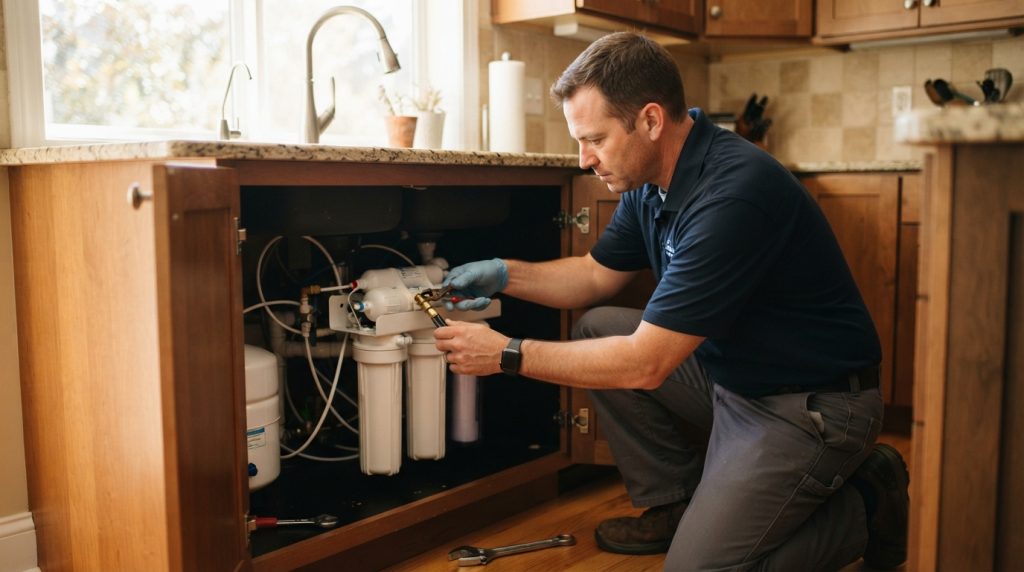
Is professional installation necessary for reverse osmosis systems? Under-sink and whole-house reverse osmosis systems generally involve plumbing connections and drain lines, so professional installation helps confirm proper setup and leak-free operation.
Based in Fort Lauderdale, FL, Learn More About Water Filter System serves customers across West Palm Beach, FL, providing water treatment and filtration guidance drawn from decades of industry experience.
A published overview of filtration and watermaker options from Learn More About Water Filter System outlines equipment configurations available for residential water treatment needs.
Keep reading
Essentially: • Choosing the right water desalination system in West Palm Beach, FL requires evaluating water production capacity,...
Read article →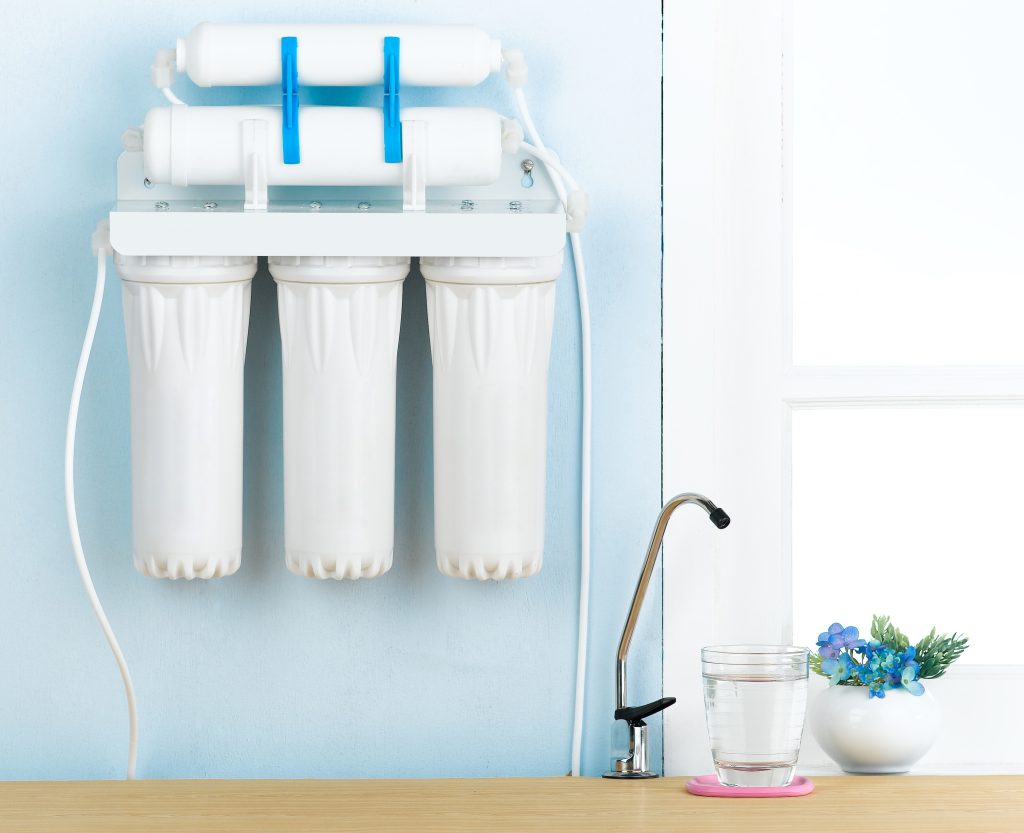
Boating in the vibrant waters around West Palm Beach offers adventure and relaxation, but ensuring the safety of...
Read article →
Clean, safe water is essential for every household, particularly in communities where water quality concerns may arise. Many...
Read article →