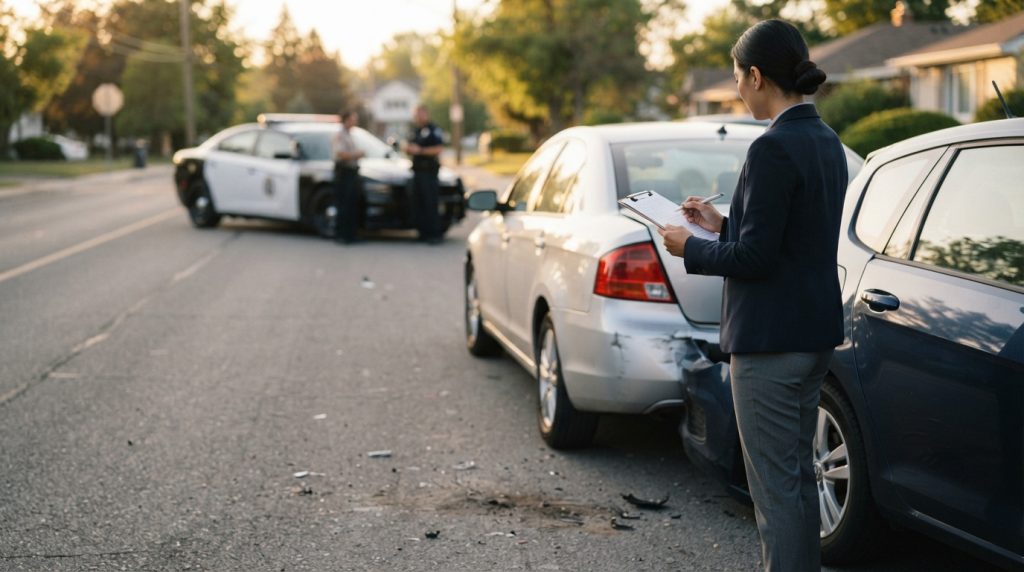
Steps a Car Accident Lawyer Takes to Build Your Injury Claim
Essentially: A car accident lawyer builds your injury claim by systematically collecting evidence, documenting your damages, and negotiating...
Read article →
A DUI charge in Arizona can sometimes be resolved with a plea to reckless driving, but Arizona law makes that outcome harder to reach than in many other states. Under A.R.S. § 28-1387, prosecutors generally may not dismiss a DUI charge unless there is an insufficient legal or factual basis to pursue it, so a reduction to reckless driving usually depends on genuine problems with the evidence.
People arrested for DUI often hear that charges are “pled down” to reckless driving. That does happen, but it is not automatic, and it is not a routine negotiation tool in Arizona the way it may be elsewhere. Understanding how the two offenses differ, and what Arizona’s DUI statutes say about dismissals, helps set realistic expectations after an arrest in Lake Havasu City or anywhere else in the state.
Reckless driving is defined in A.R.S. § 28-693. A person commits the offense by driving a vehicle in reckless disregard for the safety of persons or property. Unlike DUI, the charge does not require proof of alcohol or drugs, an alcohol concentration, or impairment.
A first reckless driving offense is a class 2 misdemeanor. The maximum penalties for a class 2 misdemeanor in Arizona include up to four months in jail under A.R.S. § 13-707 and a fine of up to $750 under A.R.S. § 13-802, plus surcharges. For a first offense, the judge may also order a license suspension of up to 90 days.
The penalties increase when there is a recent prior. If a person is convicted of reckless driving within 24 months of a prior conviction for reckless driving, racing, certain vehicle-related offenses, or DUI, the new offense becomes a class 1 misdemeanor. That carries at least 20 days in jail and a one-year license suspension.
Arizona places a specific limit on dismissing DUI charges. A.R.S. § 28-1387 provides that, except for another violation of the DUI article, the state shall not dismiss a DUI charge unless there is an insufficient legal or factual basis to pursue it.
In practice, that language matters in two ways. First, prosecutors generally can resolve one DUI-related charge in exchange for a plea to another DUI-related charge, such as an extreme DUI amended to a standard DUI. Second, because reckless driving falls under a different part of the traffic code, resolving a DUI case with a plea only to reckless driving generally requires that the DUI charge itself have a weak legal or factual foundation.
That is why a reckless driving outcome is usually tied to the evidence in a particular case rather than to a standard plea offer. Each case turns on its own facts, and no lawyer can promise that a reduction will be available.
Because the statute focuses on whether there is a sufficient legal or factual basis to pursue the DUI, the strength of the evidence often shapes what options exist. Issues that may be examined in a DUI case include:
A problem in one of these areas does not guarantee a particular outcome, but it can affect how the prosecution evaluates the case and whether a resolution other than a DUI conviction becomes possible.
Under Arizona Rule of Criminal Procedure 17.4, the parties may negotiate and reach agreement on any aspect of a case, subject to the limits set by statutes such as § 28-1387. A plea agreement must be in writing and signed by the defendant, defense counsel, and the prosecutor.
The court is not required to accept a plea agreement. Before accepting a plea, the judge must address the defendant personally, confirm that the plea is voluntary and not the result of force, threats, or promises outside the agreement, and find a factual basis for the plea. If the court rejects the agreement, the defendant must be allowed to withdraw the plea.
The prosecutor also has discretion in charging. According to the Mohave County Attorney’s Office, the reviewing prosecutor decides what charges, if any, will be filed.
The differences between the two outcomes can be significant.
The Arizona Department of Transportation states that an ignition interlock device is required after a DUI conviction. Reckless driving does not carry that requirement. For many drivers, avoiding interlock is one of the most practical differences in daily life.
Arizona’s DUI statutes impose mandatory jail terms, alcohol or drug screening, and treatment requirements that do not apply to a reckless driving conviction. A first standard DUI, for example, carries at least 10 consecutive days in jail, although most of that time may be suspended after the person completes a court-ordered program.
A reckless driving conviction does not count as a prior DUI conviction under Arizona’s DUI statutes. Those statutes look back 84 months for prior DUI convictions when deciding whether a new DUI carries enhanced penalties, and reckless driving is not on that list. The reverse is not true, however: a prior DUI within 24 months can make a later reckless driving charge more serious.
Reckless driving and DUI both carry 8 points on an Arizona driving record under the state’s administrative code. According to ADOT, a driver who accumulates 8 or more points in 12 months may be required to attend Traffic Survival School or face a suspension of up to 12 months, so even a reduced charge can affect a license.
Not necessarily. A DUI arrest can trigger an administrative license action by the Motor Vehicle Division that is separate from the criminal case. According to ADOT, a driver with a test result of 0.08 or higher, or who refuses testing, may lose their driving privilege at the time of arrest. Refusal carries a 12-month suspension, or 24 months for a second refusal within 84 months.
Because the administrative process runs on its own track, a later plea to reckless driving in court does not automatically undo an administrative suspension. Requesting an MVD hearing promptly, within the deadline stated on the suspension notice, is one way to challenge that suspension directly.
Misdemeanor DUI charges arising within city limits are typically handled by the Lake Havasu City Municipal Court on Acoma Boulevard. The Lake Havasu Justice Court on College Drive also handles misdemeanor matters, and felony cases, such as aggravated DUI, proceed in the Mohave County Superior Court, which has a Lake Havasu City location at the same College Drive complex.
According to the city, misdemeanor cases in the municipal court often include a pretrial conference, where the prosecutor shares evidence and may make a plea offer. That conference is frequently the first point at which the strengths and weaknesses of a DUI case are discussed.
Anyone facing a DUI charge may want to raise these questions with a lawyer:
Legal firms that regularly handle DUI cases in Mohave County courts can explain how local prosecutors approach these cases and what realistic options exist. A law firm should also be candid that a reduction to reckless driving depends on the facts and cannot be promised in advance. Those comparing Legal Firms can ask how often an attorney appears in the local municipal and justice courts.
From their Kingman office, Whitney | Whitney | Baldridge | Atkinson defends clients facing DUI and other criminal charges in Lake Havasu City and throughout Mohave County, and also handles family law, civil, and estate matters. Partner Jake Baldridge, a former Mohave County Bar Association president, has presented on DUI law to members of the county bar. Reach the firm at (928) 753-5295, or view their Kingman office on Google Maps.
Keep reading
Essentially: A car accident lawyer builds your injury claim by systematically collecting evidence, documenting your damages, and negotiating...
Read article →
When you or a loved one suffers an injury caused by someone else’s negligence, choosing the right legal...
Read article →
Navigating the aftermath of an accident can be overwhelming, especially when dealing with injuries, insurance companies, and mounting...
Read article →