
Stress-Free Celebrations Made Easy Using Birthday Party Rentals, Alachua, FL Services
Planning a memorable birthday party can be both exciting and overwhelming, especially when juggling all the details. Many...
Read article →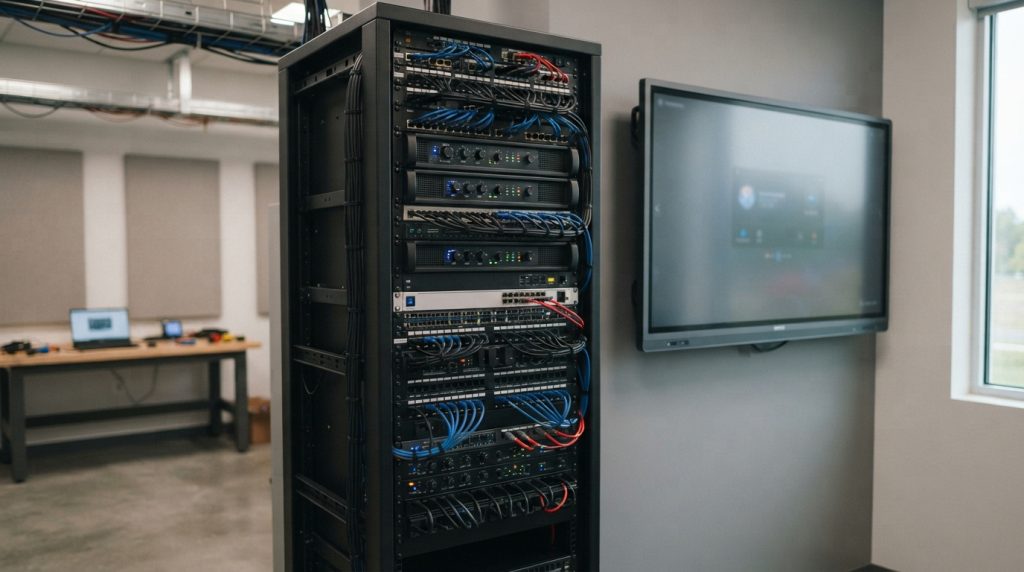
Summary first:
A successful AV Installation depends on careful site assessment, correct equipment placement, properly rated cabling, and acoustic planning that matches the room’s actual use. When these factors are addressed before equipment is mounted or wired, systems perform consistently and require fewer corrective visits after handoff.
Audio visual systems fail less often because of weak hardware and more often because of decisions made before installation day. Site conditions, wiring standards, and signal calibration each play a measurable role in whether a finished system meets expectations. The sections below outline the technical and planning factors that most directly affect installation outcomes.
Every reliable installation starts with a technician surveying the physical space before equipment selection begins. This step identifies wall and ceiling construction, ambient noise levels, and whether existing conduit or structured wiring can support new equipment.
Key elements evaluated during this phase include:
Speaker placement in particular follows documented acoustic guidelines, and height channel angles are typically specified between 30 and 55 degrees above ear level for surround formats. Skipping this assessment is one of the most common reasons an otherwise well-built system underperforms once furniture and people are in the room.
Cabling and electrical work are governed by specific codes, not general wiring practice. The National Electrical Code addresses low-voltage AV distribution and amplifier circuits directly, and installations that route speaker wire or HDMI cabling inside walls must comply with those provisions. Structured cabling standards also apply, distinguishing basic wiring grades from multimedia-rated cabling suited to AV signal distribution, as outlined in the TIA-570-D residential cabling standard.
Three practical requirements affect long-term reliability:
| Factor | Why It Matters |
| Dedicated circuits | Prevents electrical noise from contaminating audio and video signals |
| Code-compliant pathways | Required for cable routed inside walls or ceilings |
| Load-rated mounting | Structural surfaces must support several times the equipment weight |
In Tulsa, OK, older commercial and church buildings often have limited existing conduit, which makes an early electrical review especially important before any installation date is scheduled.
Equipment that is mounted and wired correctly can still underperform without proper calibration. AV receivers and video processors require adjustment against established color and audio standards, and control programming must be tested against real use cases rather than assumed defaults.
A complete installation process typically includes:
Skipping documentation does not cause immediate failure, but it increases troubleshooting time whenever the system needs future adjustment or expansion.
What causes most AV installation problems after completion? Incomplete site assessment and inadequate power planning are the most common causes, since both affect signal quality and equipment longevity after installation.
Does building age affect AV installation complexity in Tulsa, OK? Yes. Older structures often lack existing conduit or dedicated circuits, which can extend planning time before equipment installation begins.
Is calibration necessary for every AV system? Any system with video displays or multi-speaker audio benefits from calibration, since factory default settings rarely match a specific room’s acoustics or lighting.
How long does a typical commercial AV installation take? Timelines vary by system complexity, room conditions, and whether existing infrastructure can be reused, so no fixed duration applies to every project.
Based in Oklahoma City, OK, KRAMER PRO serves customers across Tulsa, OK, operating from its Oklahoma City, OK location while supporting projects in the surrounding region.
The published details for “Learn More About AV Installation Services” cover the system design and installation options available in the service area.
Keep reading
Planning a memorable birthday party can be both exciting and overwhelming, especially when juggling all the details. Many...
Read article →
Organizing a memorable event involves countless details, from selecting the venue to finalizing the guest list. One often...
Read article →
Hosting a successful fundraiser takes more than just good intentions—it requires an engaging activity, a welcoming space, and...
Read article →