Home / Paper Tube Manufacturer / Article
What You Should Know About Spiral Paper Tubes and Cores
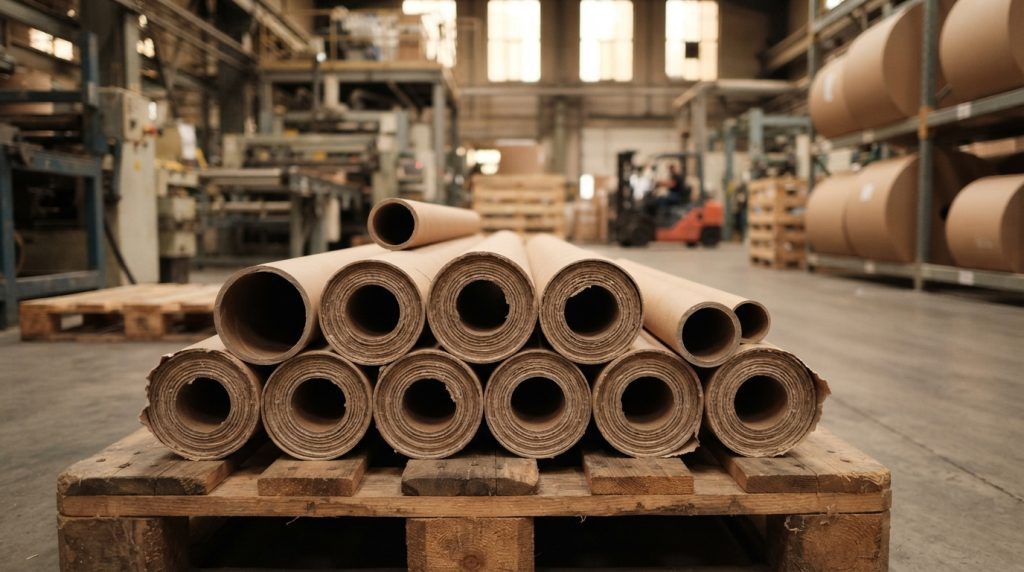
Quick take:
- Spiral paper tubes and cores are cylindrical packaging and industrial components made by winding paper or paperboard layers together with adhesive.
- They serve roles ranging from shipping protection to the structural core of tape, film, and label rolls.
- Federal procurement guidance recommends recovered fiber content for industrial paperboard products including tubes and cores.
A spiral paper tube or core is a cylindrical product formed by winding continuous strips of paper or paperboard at an angle, bonding the layers with adhesive to create a rigid, hollow shape used for shipping, winding, and structural support. This manufacturing method is distinct from convolute winding, which wraps paper straight across rather than at a diagonal, and it generally allows for continuous production of long tube lengths that are later cut to size.
Businesses that need custom cylindrical packaging or core components typically source spiral paper tube and core products based on wall thickness, diameter, length, and the specific load-bearing or protection requirements of their applications. Specifications can vary depending on whether the tube is used for shipping goods, supporting rolls of film or tape, or serving as a mailing container. Manufacturers often work from customer-provided technical drawings or samples to ensure the finished products meet the required dimensions and tolerances. Spiral Paper Packaging Solutions by Callenor provide businesses with customized paper tube and core options designed to meet different industrial packaging, storage, and shipping requirements.
How Spiral Winding Differs From Other Tube Construction
Spiral winding is one of several methods used to produce paper tubes, and the technique affects strength, cost, and finish.
- Spiral wound tubes are built from narrow paper strips wound at a diagonal angle, layer upon layer, with adhesive between plies.
- Convolute wound tubes wrap a single continuous sheet straight around a mandrel, which can produce a smoother interior surface for certain applications.
- Wall thickness in either method is controlled by the number of plies applied during winding, and paper tubes consist of paper or paperboard sheet layers wound together to form strong, hollow, and usually cylindrical shapes, with the layers laminated or bonded together using adhesives, and wall thickness varying depending on the number of layers wrapped during manufacturing.
Core and tube quality matters beyond the initial order. A TAPPI survey found that approximately 50% of web breaks in paper mills were attributed to roll or core-related defects, and in high-volume operations a single defective core can rapidly turn an entire production run into scrap if straightness, roundness, or strength specifications are not met. For converters and packagers, this makes dimensional consistency and strength testing a practical concern rather than a cosmetic one.
Common Applications for Paper Tubes and Cores
Spiral paper tubes and cores show up across several industries, often without consumers noticing them directly.
1. Shipping and mailing tubes for documents, posters, and rolled goods.
2. Cores for winding tape, labels, film, and textile materials.
3. Protective packaging for cylindrical or fragile products during storage and transit.
4. Industrial components such as concrete forming tubes and paperboard drums.
Material selection generally favors kraft paper or recycled paperboard. The majority of paper tubes and paper cores are manufactured using durable, high-strength materials such as kraft paper and paperboard, which are derived from sustainable wood pulp, cellulose fibers, or reclaimed recycled content. Federal procurement guidance reflects this reality: the EPA’s paper procurement guidelines note that recovered fiber content recommendations for industrial paperboard, including tubes, cores, drums, and cans, range between 45 and 100 percent postconsumer fiber depending on the product category.
Choosing a Tube or Core Specification
|
Factor |
Typical Consideration |
|
Wall thickness |
Determined by number of plies; affects crush resistance |
|
Diameter and length |
Set by the product or material being wrapped or shipped |
|
End treatment |
Plastic, metal, or wooden plugs for sealing or reinforcement |
|
Winding method |
Spiral for continuous runs; convolute for smoother interior finish |
Buyers across the USA typically specify these variables alongside intended storage conditions and handling methods, since humidity and repeated stacking can affect tube performance over time.
Frequently Asked Questions
What is the difference between a paper tube and a paper core? The terms are often used interchangeably, but a core typically refers to the inner cylindrical support around which another material, such as tape or film, is wound, while a tube more often describes a standalone container for shipping or storage.
Are spiral paper tubes recyclable? Paper tubes and cores made from kraft paper or recycled paperboard are generally recyclable where paper recycling programs accept rigid paperboard products, though acceptance varies by local waste management rules.
What causes paper core failures in production settings? Dimensional inconsistency, insufficient wall strength, or poor roundness can cause cores to fail under load, which is why manufacturers test against established paperboard standards before shipment.
Can paper tubes be customized for specific equipment? Yes, diameter, wall thickness, length, and end treatments can typically be adjusted to match specific machinery or packaging requirements, though lead times depend on the complexity of the specification.
Spiral paper tubes and cores remain a practical, adaptable packaging category for businesses that need cylindrical protection, winding support, or shipping containment. Published details for View Callenor Company, Inc. on Google Business Profile include location and contact information relevant to buyers researching regional suppliers.