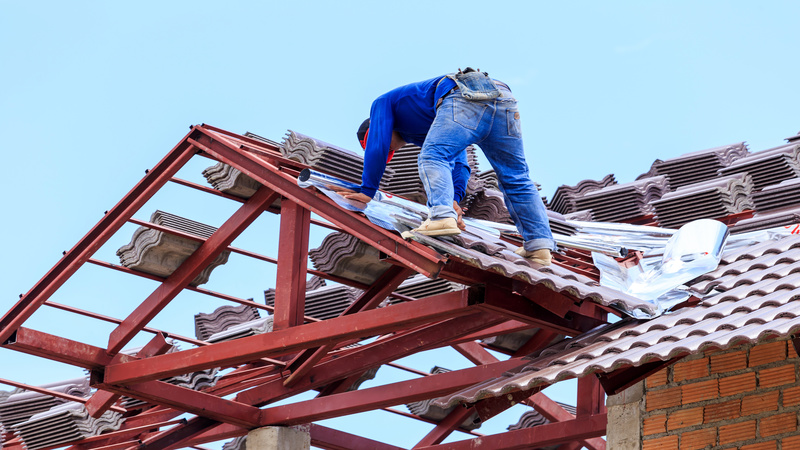
How a Roofing Contractor Ensures Long-Lasting Protection for Your Home
A quality roof is crucial to maintaining the safety, comfort, and energy efficiency of your home. When homeowners...
Read article →
Commercial roofing problems do not always begin with visible punctures or widespread surface damage. Sometimes, a narrow opening between two overlapping membrane sections is enough to allow moisture into a roofing system. Valley Roofing & Repair, a Phoenix-based roofing provider serving Peoria and surrounding communities, offers commercial roof inspections and repairs that address concerns involving roofing membranes, seams, and related components.
For commercial property owners in Peoria, AZ, membrane seam integrity is particularly important because roofs are exposed to intense sunlight, temperature fluctuations, and seasonal storms. Even a small separation can become a concern when rainfall reaches vulnerable areas.
Understanding why membrane seams separate, how water travels through damaged roofing assemblies, and when professional evaluation is appropriate can help building owners make better maintenance decisions.
Many low-slope commercial roofs use sheets of roofing membrane to create a protective barrier against moisture.
These sheets are joined along their edges using methods appropriate for the particular roofing system. The resulting connections are called seams.
Their purpose is to maintain continuity across the roof surface and help prevent water from reaching underlying materials.
Common membrane systems include thermoplastic polyolefin (TPO), polyvinyl chloride (PVC), and ethylene propylene diene monomer (EPDM).
Although these materials can serve similar weatherproofing purposes, their seam attachment methods differ.
TPO and PVC roofing systems commonly use heat welding to bond overlapping membrane sections.
When performed correctly under appropriate conditions, this process joins compatible membrane surfaces into a continuous connection.
Welding quality depends on proper surface preparation, equipment settings, installation techniques, and material requirements.
Certain EPDM roofing systems use approved seam tapes, primers, or adhesive methods to join membrane sections.
These connections require proper preparation and installation to achieve suitable adhesion.
The exact products and procedures depend on the membrane manufacturer’s specifications.
Modified bitumen and other commercial roofing assemblies also incorporate overlapping material connections.
However, their installation and repair methods differ from those used for single-ply membranes.
A roofing professional must identify the existing system before determining how an affected seam should be evaluated or repaired.
Seam separation can result from several interacting factors.
It is not always possible to identify a single cause through visual observation.
Roof membrane connections depend on the materials being joined and the conditions present during installation.
For heat-welded membranes, inadequate temperature, pressure, or welding speed may prevent the intended bond from forming.
Contaminated surfaces can also interfere with proper joining.
For adhesive-based systems, insufficient preparation or incorrect product application may reduce adhesion.
Some installation deficiencies become apparent relatively soon, while others remain unnoticed until weather exposure reveals the weakness.
Commercial roofs experience repeated heating and cooling.
In the Phoenix metropolitan area, exposed roof surfaces can become considerably hotter than the surrounding air during sunny conditions.
As temperatures change, roofing membranes and associated components expand and contract according to their material properties.
Roofing systems are designed to accommodate expected movement, but poorly detailed or already weakened connections may experience additional stress.
Thermal movement alone does not establish that a seam has failed. Installation quality, attachment, material condition, and roof design also influence performance.
Roofing membranes and seam materials can change as they age.
Exposure to ultraviolet radiation, heat, moisture, and environmental conditions may affect certain material properties.
However, the way aging influences seam performance depends on the membrane type and attachment method.
A seam on an older roof should not automatically be considered defective.
Its condition must be evaluated against the roofing system’s actual performance and visible evidence.
Commercial roofs frequently support HVAC equipment, ventilation components, and other building systems.
Technicians may need to access these areas for routine servicing.
Uncontrolled foot traffic, dragged equipment, or misplaced tools can damage susceptible roofing materials.
If traffic affects a membrane overlap, the resulting stress may contribute to separation or adjacent surface damage.
Existing openings can allow moisture to reach vulnerable areas within the roofing assembly.
Water intrusion may complicate later repairs and contribute to deterioration of susceptible underlying materials.
However, moisture discovered near a seam does not necessarily mean the seam was the original entry point.
Other roof details, including flashing and penetrations, must also be considered.
A membrane seam is intended to maintain a weather-resistant connection between adjacent roofing sheets.
When that connection opens, water may gain access beneath the membrane.
The consequences depend on the size and location of the opening, the roof’s drainage conditions, and the materials below the membrane.
Rainwater can reach a separated seam through direct rainfall, runoff, or temporary accumulation on a low-slope roof.
Once beneath the surface, moisture may move along interfaces between roofing layers.
This means the visible seam opening may not align with the location where water eventually enters the building.
Some commercial roofing systems contain insulation beneath the waterproofing membrane.
If moisture enters this layer, its effects vary depending on the insulation material, the amount of water, and how long the assembly remains wet.
Certain insulation products may experience changes in thermal performance or physical condition.
Wet materials may require further evaluation before a lasting repair can be determined.
A significant challenge with commercial roof leaks is the movement of moisture beneath the visible roofing surface.
Water may follow joints, material interfaces, or changes in elevation.
As a result, an interior ceiling stain can appear some distance from the actual exterior opening.
This is why commercial roof leak repair requires attention to the complete moisture pathway rather than simply the nearest visible defect.
Seam separation is not always obvious from ground level.
Property managers should be aware of observable conditions that may justify closer examination.
A membrane edge that no longer lies properly against the adjoining sheet may indicate a loss of attachment.
The condition can appear as a slight opening or a more noticeable lifted section.
However, wrinkles and other surface irregularities do not always indicate seam failure.
A professional evaluation is necessary to distinguish normal surface conditions from defects.
Water intrusion that occurs repeatedly during heavy rainfall may indicate an opening in the roofing system.
Seams are one possible source, but flashing, penetrations, drains, and other roof details can produce similar symptoms.
The timing and location of leaks should be documented to support accurate investigation.
A noticeable opening between overlapping membrane sections may require attention.
The significance depends on whether the opening compromises the weather-resistant connection.
Some roof systems also contain intentional transitions or specialized detailing that should not be mistaken for separation.
Ceiling discoloration, damp interior finishes, or moisture near rooftop equipment locations may indicate water entering the building envelope.
These symptoms are not specific to seam failure, but they provide useful evidence during roof evaluation.
A small seam separation may appear less concerning than a large puncture or displaced roofing component.
However, the visible size of an opening does not always correspond to the extent of concealed moisture intrusion.
Water entering through a limited opening may spread beneath the roofing surface, particularly when drainage conditions allow moisture to remain nearby.
The actual risk depends on the roof assembly, moisture exposure, and condition of surrounding materials.
For example, a localized opening discovered promptly may be suitable for a focused repair.
A similar opening that has allowed repeated moisture intrusion could require more extensive investigation.
The important distinction is whether the underlying roofing system remains suitable for continued service.
Commercial roof evaluation involves more than identifying a visible gap.
A roofing professional must consider the membrane type, roof age, installation method, and surrounding conditions.
The investigation may begin with a visual review of roof surfaces, penetrations, flashing, drainage areas, and accessible seams.
Information about previous repairs and recurring interior leaks can also help narrow the investigation.
Depending on the membrane system, qualified professionals may use approved inspection or seam-testing methods to assess connection integrity.
The appropriate technique depends on manufacturer requirements and the particular roofing material.
For Peoria property managers comparing Commercial Contractor Roofing services, understanding these inspection considerations can help them ask more useful questions about roof conditions and proposed repairs.
A thorough evaluation should help establish whether the observed separation is isolated or part of a more widespread concern.
Not every separated seam requires a complete roof replacement.
Localized commercial roof repairs may be appropriate when the affected materials remain suitable and the problem can be addressed using a compatible repair method.
The correct procedure depends on the existing membrane.
For certain TPO or PVC roofing systems, compatible membrane materials may be welded as part of an approved repair.
Successful work requires suitable surface preparation, appropriate equipment, and adherence to manufacturer instructions.
A deteriorated or contaminated membrane may not be suitable for a simple welded repair.
EPDM systems may require compatible primers, seam materials, or other manufacturer-approved products.
Repair suitability depends on the condition of the existing membrane and surrounding surfaces.
Using incompatible products can create additional problems rather than restoring reliable performance.
If water has reached underlying insulation or decking, correcting the visible seam may not fully resolve the issue.
Further evaluation may be needed to determine the condition of affected materials.
A broader roofing solution may be appropriate when damage is extensive or the existing assembly cannot support a reliable localized repair.
The decision should reflect the actual condition of the roof rather than assumptions based on age alone.
Applying an ordinary sealant over a separated seam may appear to be a convenient temporary response.
However, commercial membrane systems require materials compatible with their chemical composition and installation methods.
An unsuitable product may fail to bond correctly or interfere with subsequent repairs.
Even when a sealant initially covers the opening, it may not restore the original seam’s intended performance.
This is particularly important with commercial flat roofing systems, where water can remain near vulnerable joints.
Professional repair methods should follow the applicable membrane manufacturer’s requirements.
Preventive inspection and maintenance can help identify changes in membrane condition before more significant leakage develops.
The National Roofing Contractors Association recommends regular roof assessments and attention to visible deterioration, including loose seams and flashing defects.
For commercial properties, inspection frequency should reflect the roof type, condition, maintenance requirements, and recent weather events.
Strong winds and heavy rainfall may expose existing weaknesses or cause new damage.
Following major weather events, authorized professionals can review accessible roofing areas for changes requiring attention.
Records identifying repaired seams, recurring leaks, and earlier inspection findings provide useful information when new concerns arise.
Comparing conditions over time can help determine whether defects are isolated or recurring.
Property managers can establish procedures to reduce unnecessary roof traffic and document damage observed during authorized equipment servicing.
Appropriate walkways or protective measures may be recommended depending on the roof system.
When seam openings, membrane damage, or water intrusion are identified, timely professional evaluation can help determine whether corrective work is needed.
Commercial roofing maintenance should prioritize accurate diagnosis rather than treating every surface irregularity as an emergency.
Membrane seam separation is one potential source of moisture intrusion on low-slope commercial roofs.
Its significance depends on the type of membrane, condition of the connection, amount of water exposure, and integrity of nearby roofing materials.
A visible opening may be suitable for a localized repair, while recurring leaks or concealed moisture damage may require broader evaluation.
For commercial property owners in Peoria, the most useful approach is to document changing roof conditions, avoid unqualified rooftop repairs, and seek professional assessment when signs of leakage develop.
Understanding how membrane seams function helps owners ask better questions, evaluate repair recommendations, and maintain a clearer picture of their building’s roofing condition.
Based at 4010 N 27th Ave, Building C, Phoenix, AZ 85017, Valley Roofing & Repair serves commercial and residential property owners in Peoria and surrounding Arizona communities with roofing inspections, repairs, maintenance, and replacement services. They have been BBB accredited since March 10, 2025, and third-party contractor records identify Arizona ROC license #358958, although current state licensing status should be independently confirmed. Their team can be contacted at (623) 250-7663, and property owners can find their office on Google Maps.
Keep reading
A quality roof is crucial to maintaining the safety, comfort, and energy efficiency of your home. When homeowners...
Read article →
A well-maintained roof is a vital component of any property, directly influencing curb appeal, safety, and market value....
Read article →
Takeaway: A roof inspection identifies wear, leaks, and storm damage before they turn into structural problems, and most...
Read article →