
How a Traffic Control Truck Enhances Safety for Road Construction in the USA
Road construction projects are an essential part of maintaining and improving infrastructure across the United States. However, these...
Read article →Home / Manufacturer / Article
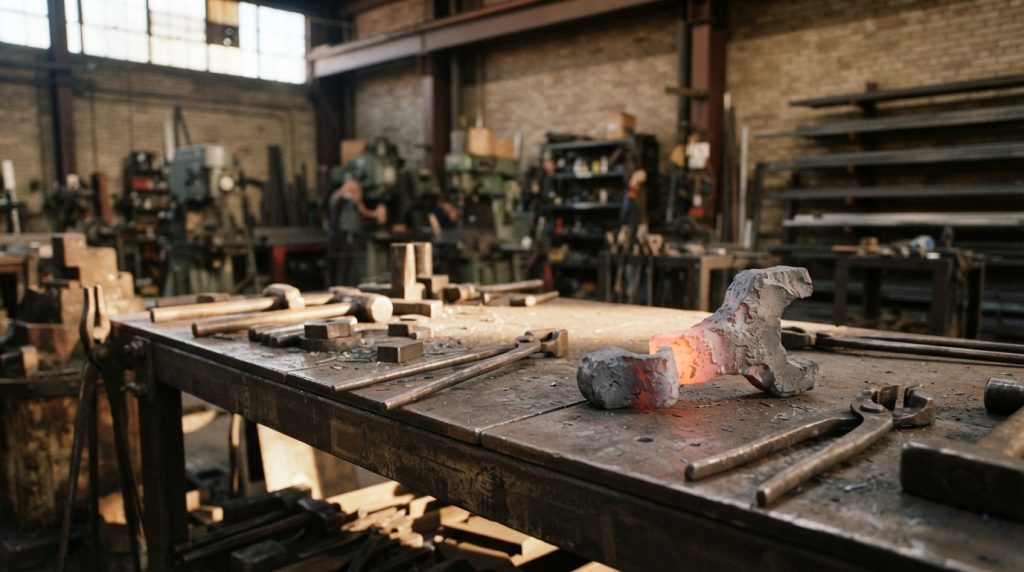
Short version:
• A forge company shapes heated or room-temperature metal under high pressure into strong, precisely dimensioned parts used across heavy industry.
• Closed die hot forging is a core process offered by many forge companies, producing components for agriculture, energy, rail, and construction equipment.
• Forged parts are valued for strength and dimensional consistency compared with cast or machined-only alternatives, supporting long-term equipment reliability.
A forge company transforms raw metal billets into precisely shaped, load-bearing components by applying controlled heat and pressure rather than relying on casting or machining alone. This manufacturing process helps refine the metal’s internal grain structure, often resulting in components with improved strength, durability, and resistance to repeated stress. Industries such as agriculture, rail, construction, marine, and oil and gas depend on forged components for equipment and machinery that must withstand demanding operating conditions. Forge Company Services by Cornell Forge Co support industrial manufacturing needs by providing forging solutions for applications where component strength, reliability, and consistent performance are essential.
How the Forging Process Works
Forging relies on compressive force rather than melting metal, which preserves the internal grain structure of the material and improves its mechanical properties. According to the Forging Industry Association, forging is a bulk forming process performed cold, warm, or hot, with warm and hot forging requiring a preheating step before the metal is shaped.
Closed die forging, one of the most common methods used by production forge shops, generally follows three stages:
1. Heating – Metal is brought to a temperature that makes it pliable enough to deform without cracking.
2. Deformation – The heated stock is pressed between two die halves shaped to the final part geometry, forcing material to fill the impression under pressure.
3. Cooling – The formed part is cooled under controlled conditions to lock in strength and avoid defects from uneven temperature loss.
This sequence is standard across the closed die hot forging process used by industrial forge operations, including the hot forging method described on Cornell Forge Co.’s own process overview.
Forging Versus Other Metal Shaping Methods
Not every metal part needs to be forged. Casting, machining, and forging each suit different performance and cost requirements, and understanding the tradeoffs helps buyers choose the right process for a given application.
|
Method |
Strength Profile |
Best Suited For |
Typical Limitation |
|
Closed Die Forging |
High fatigue and impact resistance |
Gears, spindles, hubs, structural components |
Higher tooling cost for custom dies |
|
Casting |
Moderate strength, good for complex shapes |
Housings, brackets, decorative parts |
More prone to internal voids |
|
CNC Machining |
High precision, moderate strength |
Finishing details, tight tolerances |
Not ideal as sole shaping method for high-stress parts |
Forged components are frequently finished with secondary operations such as machining, sawing, or heat treating to reach final specifications, meaning forging and machining often work together rather than as competing processes.
Materials and Applications Handled by Forge Operations
Forge companies typically work with a defined set of metals chosen for their forgeability and end-use performance. Common materials processed by closed die hot forging operations include carbon steel, alloy steel, and stainless steel, each selected based on the stress, corrosion resistance, or cost requirements of the finished part.
• Carbon steel – commonly used for cost-sensitive parts where moderate strength is sufficient
• Alloy steel – selected for high-stress components such as gears and shafts
• Stainless steel – applied where corrosion resistance is a priority
Forged parts produced through these methods serve sectors including agriculture, rail, marine, construction, forestry, oil, and mining, where equipment uptime and part durability directly affect operating costs. Forging capacity remains concentrated among specialized manufacturers across the USA that maintain in-house tooling, heat treating, and process controls to meet these industrial demands.
Frequently Asked Questions
1. What industries typically use forged parts?
→ Forged components are most common in sectors where equipment experiences heavy mechanical stress, including agriculture, rail, marine, construction, forestry, mining, and oil and gas operations.
2. Is forging more expensive than casting?
→ Tooling costs for custom forging dies can be higher upfront, but forged parts often offer better strength and longer service life, which can reduce replacement frequency over time.
3. What secondary services are often paired with forging?
→ Sawing, plating, machining, testing, inspection, and assembly are common secondary services that help bring a forged part to final specification before shipment.
4. Does closed die forging work with stainless steel?
→ Yes, closed die hot forging processes are commonly applied to stainless steel in addition to carbon and alloy steel, depending on the corrosion resistance required for the application.
Current business information, including the location and category within the USA, is available on Cornell Forge Co.’s Google Business Profile.
Keep reading
Road construction projects are an essential part of maintaining and improving infrastructure across the United States. However, these...
Read article →
Efficient material handling is a cornerstone of productivity on any job site. Construction crews, landscapers, and contractors all...
Read article →
Ensuring the safety and integrity of medical devices is a critical component of healthcare in the United States....
Read article →