
Benefits of Body Fat Laser Therapy as Experienced by Glendale, AZ Residents
Body fat laser treatment is an innovative technology that has transformed the wellness and beauty industry. It promises...
Read article →Home / Pediatric Therapy / Article
Takeaway:
• Pediatric physical therapy addresses movement, strength, and developmental delays in children from infancy through the teenage years.
• Treatment typically combines play-based exercises with structured goals tied to milestones like walking, balance, and coordination.
• Families in Downingtown, PA can access pediatric-focused PT programs designed around a child’s specific stage of development.
Parents searching for answers about a child’s delayed milestones or recovery after an injury often want to know one thing first: does pediatric physical therapy actually help, and when should a child start. The short answer is that pediatric physical therapy supports children who face challenges with movement, coordination, strength, or motor development, and earlier intervention tends to produce better outcomes than waiting.
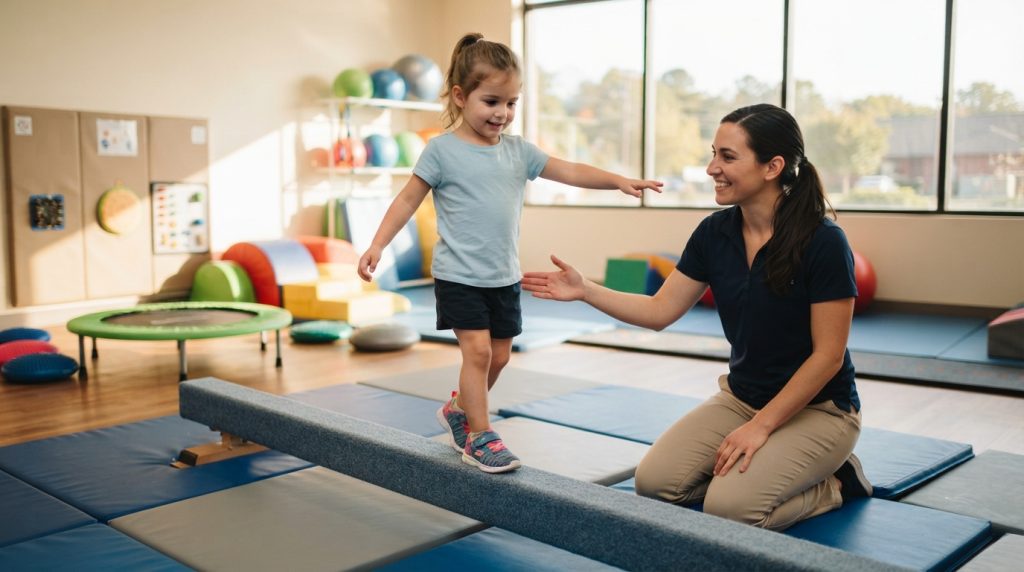
Families considering pediatric physical therapy in Downingtown are often responding to a pediatrician’s referral, a daycare provider’s observation, or their own sense that a child is not hitting expected milestones. Unlike adult physical therapy, pediatric programs are built around play, since engagement during sessions tends to matter as much as the exercises themselves.
Pediatric physical therapists work with a wide range of concerns, not just sports injuries. According to a 2025 evidence-based clinical practice guideline from the American Physical Therapy Association’s Academy of Pediatric Physical Therapy, physical therapy delivered with appropriate intervention frequency and duration, combined with home practice, supports better outcomes and social participation for children with developmental coordination disorder. Common reasons families seek care include:
• Delayed gross motor milestones, such as late walking, crawling, or sitting
• Low muscle tone or noticeable weakness compared to peers
• Balance or coordination difficulties affecting play and school activities
• Recovery needs following an injury, surgery, or diagnosis such as cerebral palsy
A pediatric evaluation typically looks at strength, range of motion, posture, and functional movement patterns before a plan is built around the child’s specific goals.
Pediatric PT differs from adult rehabilitation mainly in delivery, not in the underlying science of movement. Sessions are built to keep a child’s attention through games, obstacle courses, and interactive equipment rather than repetitive adult-style exercises. Typical session elements include:
1. Warm-up activities disguised as play, such as climbing or ball games
2. Targeted strength and balance exercises tied to the child’s specific goals
3. Gait or movement pattern practice when walking or coordination is a concern
4. Parent or caregiver coaching so exercises can continue at home between visits
Families in Downingtown, PA often ask how long a child will need therapy. Duration depends entirely on the underlying concern, with some children attending for a few months to address a short-term delay and others continuing longer for chronic conditions.
Parents sometimes confuse physical therapy with occupational or speech therapy, since all three can appear on a child’s care plan at once.
| Service | Primary Focus | Typical Goals |
| Pediatric Physical Therapy | Gross motor movement, strength, balance | Walking, climbing stairs, coordination |
| Occupational Therapy | Fine motor skills, daily living tasks | Handwriting, dressing, self-feeding |
| Speech Therapy | Communication and feeding | Language development, swallowing safety |
These services often overlap and are sometimes recommended together, depending on a child’s evaluation results and the concerns raised by a parent or pediatrician.
Early intervention is a recurring theme in pediatric rehabilitation literature, since children are still developing the neuromuscular patterns that influence lifelong movement habits. A short list of signs that commonly prompt a referral includes:
• A child avoiding physical play that peers engage in easily
• Noticeable asymmetry in movement or posture
• Frequent falling or difficulty with stairs beyond the expected age range
• Slow progress on milestones flagged during a pediatric wellness visit
Parents can expect an initial evaluation, a written plan with measurable goals, and periodic reassessment as the child progresses. Readers in Downingtown, PA considering this step for a child typically start with a conversation with their pediatrician before scheduling an evaluation.
At what age can a child start physical therapy? Pediatric physical therapy can begin in infancy and continue through the teenage years, with treatment adjusted to the child’s developmental stage at each point.
Does a child need a doctor’s referral first? Many pediatric PT programs accept a pediatrician’s referral, though policies vary, so checking directly with a provider about required paperwork is a practical first step.
How is pediatric PT different from adult PT? Pediatric PT uses play-based activities and shorter, more varied exercise sequences to hold a child’s attention, while the clinical goals around strength, balance, and mobility remain similar to adult care.
What conditions commonly require pediatric PT? Developmental delays, low muscle tone, balance difficulties, and recovery from injury or surgery are among the most common reasons children are referred for physical therapy.
Based in USA, Kinetic Physical Therapy Downingtown serves families across Downingtown, PA who are looking into movement or development concerns for a child.
Program details for families evaluating pediatric options can be reviewed through view therapy programs, which outlines the local service area.
Keep reading
Body fat laser treatment is an innovative technology that has transformed the wellness and beauty industry. It promises...
Read article →
Having a child with any type of developmental issues can be quite challenging for any parent. Thankfully, there...
Read article →