The Essential Guide to Choosing Modern Kitchen Appliances
• Modern kitchen appliances combine energy efficiency, smart connectivity, and space-saving design, with ENERGY STAR certification remaining the...
Read article →Home / Appliances / Article
Quick summary:
Choosing the right countertop carbonator comes down to matching daily drinking habits with a machine’s carbonation style, bottle type, and long-term CO2 costs. For households that drink several glasses of seltzer a day, the decision affects grocery budgets, kitchen counter space, and how often a CO2 cylinder needs swapping.
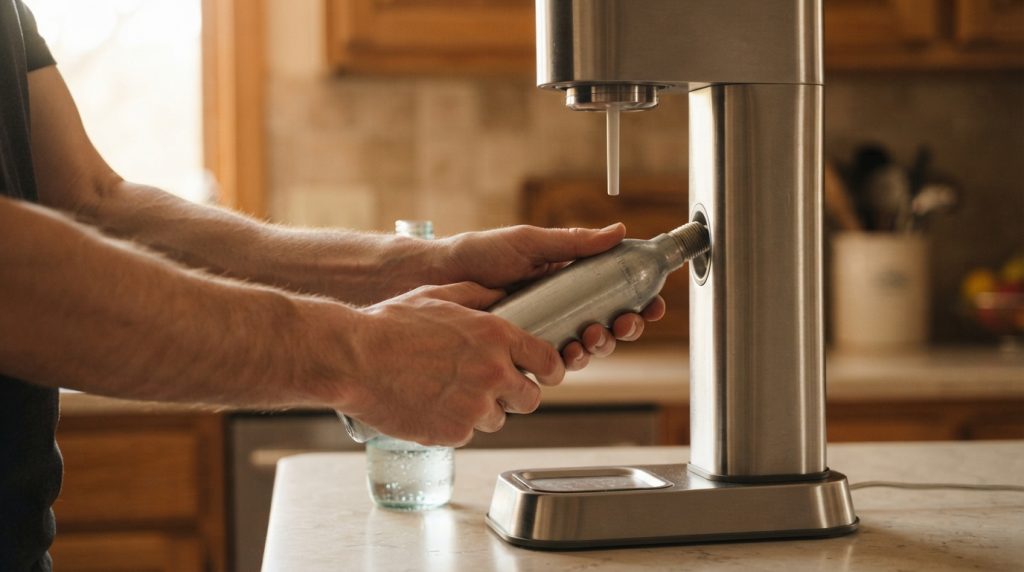
A Home Sparkling Water Maker turns a pitcher of cold tap water into fizzy seltzer in under a minute, without the recycling bins full of plastic bottles that bottled sparkling water leaves behind. Most countertop units rely on a pressurized CO2 cylinder connected to a carbonating head, so the core mechanics are similar across brands even though bottle design and button feel vary.
How Home Carbonation Machines Work
Every countertop carbonator follows the same basic sequence, though the hardware differs by brand.
Cold water is not just a preference. Industry guides consistently note that chilled water holds more dissolved carbon dioxide than warm water, which directly affects how crisp and long-lasting the fizz feels in the glass.
What Separates One Machine From Another
Not every carbonator is built the same way, and the differences show up fastest in daily use.
Water quality also plays a role in taste, since tap water is treated and monitored differently than bottled water. The EPA’s drinking water regulations set the baseline safety standards that public tap water systems must meet, which is the same water most home carbonators use as their starting point.
Comparing Common Carbonation Styles
| Feature | Push-Button Countertop Unit | Lever-Style Unit | Soda Siphon |
|---|---|---|---|
| Typical learning curve | Low | Low to moderate | Moderate |
| Beverage flexibility | Varies by model | Varies by model | Water only, usually |
| CO2 refill convenience | Retail exchange common | Retail exchange common | Small cartridges, frequent swaps |
| Best for | Daily multi-glass use | Daily multi-glass use | Occasional single servings |
This table is a general guide rather than a verdict on any single product, since bottle size, cylinder capacity, and build quality still vary within each category.
Everyday Habits That Should Guide the Choice
Matching a machine to a household’s actual routine matters more than picking the model with the longest feature list.
Frequently Asked Questions
Does cold water carbonate better than room-temperature water? Yes. Cold water holds more dissolved carbon dioxide, which produces a crisper, longer-lasting fizz compared to carbonating water at room temperature.
Can a home carbonator replace bottled sparkling water entirely? For most households, yes, since the machine carbonates tap water on demand and eliminates the need to buy and recycle bottled seltzer regularly.
How often does the CO2 cylinder need to be replaced? This depends on cylinder size and daily carbonation volume, but many households rely on retail exchange programs rather than mail-order refills for convenience.
Is tap water safe to carbonate at home? Public tap water in the United States is monitored under federal drinking water standards, making it a reliable starting point for home carbonation in most municipal systems.
Finding the Right Fit
Selecting a countertop carbonator is less about chasing the newest model and more about matching carbonation style, bottle design, and CO2 refill logistics to how a household actually drinks fizzy water day to day. Drinkmate designs home carbonation machines built to fizz water and other cold beverages without diluting them, offering a practical option for households that want flexibility beyond plain seltzer. Those comparing models and weighing bottle types, CO2 options, and everyday convenience can Visit Drinkmate to review available machines and accessories before making a decision.
Keep reading
• Modern kitchen appliances combine energy efficiency, smart connectivity, and space-saving design, with ENERGY STAR certification remaining the...
Read article →
Summary first: • Carlsbad residents can access professional appliance repair, replacement, delivery, and installation through a full-service home...
Read article →
Transforming your kitchen into a functional, stylish space often starts with choosing the right appliances. In today’s fast-paced...
Read article →