Enhance Your DIY Projects with the Perfect Stain Pad Applicator
When embarking on a do-it-yourself (DIY) project, the tools you choose can make all the difference in achieving...
Read article →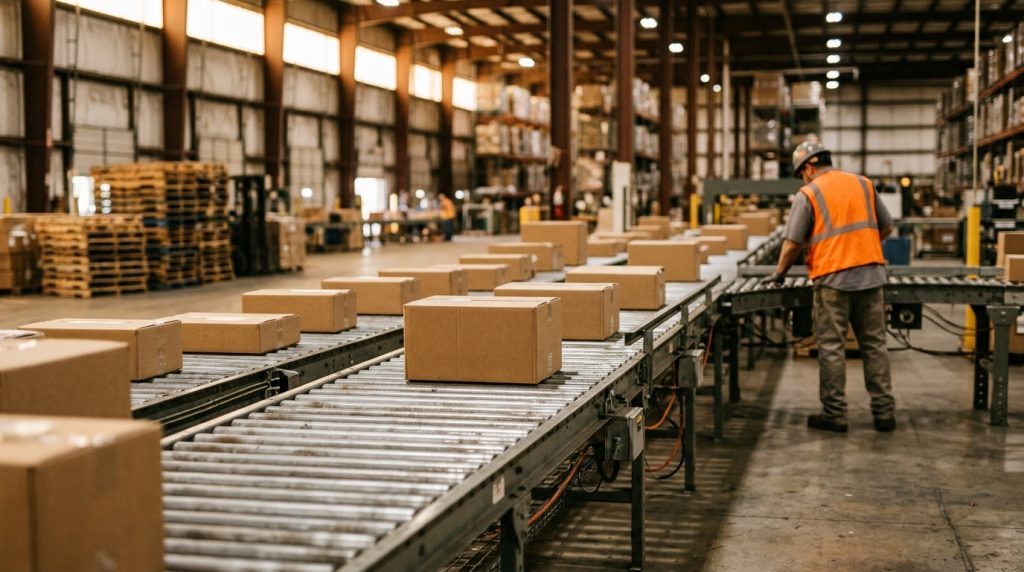
Key Takeaways:
• Consistent, scheduled maintenance is a primary factor in determining the service life and uptime of any motorized conveyor system.
• U.S. facilities must align maintenance practices with OSHA safety standards, particularly lockout/tagout requirements, to protect workers and maintain compliance.
Proper maintenance of a Powered Roller Conveyor From Conveyor Systems & Engineering, Inc. directly affects throughput, worker safety, and total cost of ownership. Facilities that establish structured inspection routines for their systems can reduce unplanned stoppages and extend component life.
Core Maintenance Tasks for Motorized Roller Systems
Daily, weekly, and monthly checks should be established based on usage intensity and equipment design. Daily inspections typically include a visual assessment of the conveyor’s overall condition. Beyond visual checks, three task categories drive most of the maintenance workload:
Lubrication
Properly lubricated components are less susceptible to wear and tear, ensuring the conveyor operates smoothly and efficiently. Lubricants reduce friction, dissipate heat, and serve as a barrier against contaminants.
Roller bearings typically require a high-quality grease that can withstand heavy loading, while chains used in some conveyor designs may benefit from a lightweight oil that provides adequate coverage without attracting dust and dirt.
Gear meshing points, bearing oil filling holes, and moving parts generally require lubrication once per shift. One caution: the drive belt is the most easily worn component, so care must be taken not to drip oil onto it, which can cause slippage, premature aging, or damage.
Belt and Roller Inspection
Conveyor systems require regular maintenance including belt replacement, roller cleaning, sensor adjustment, and lubrication. Rollers should be checked for flat spots, misalignment, and unusual noise during each scheduled inspection cycle. Replacing a single worn roller early costs far less than a cascading failure that takes an entire zone offline.
Electrical and Sensor Checks
Each zone’s independent operation means coordinated safety logic is needed across zones. When a jam occurs in one zone, downstream zones might continue running, potentially creating secondary jams or safety hazards. Proper safety circuit design ensures that when one zone detects an unsafe condition, adjacent zones receive signals to slow or stop appropriately.
OSHA Compliance and Lockout/Tagout Requirements
Maintenance in the USA is not just a mechanical concern — it carries legal obligations. ANSI/ASME B20.1 is the U.S. consensus safety standard for the design, construction, installation, maintenance, and operation of conveyors and conveying systems.
The most directly enforced requirement for maintenance work is lockout/tagout. According to the OSHA standard 29 CFR 1910.147, conveyors must be stopped and their power sources locked out and tagged out during maintenance, repair, and servicing. If power is necessary for testing or minor adjustments, it should only be supplied to the specific servicing operation.
The lockout/tagout standard ranked fourth on OSHA’s Top 10 most cited standards in FY 2025 with 2,562 violations. Most violations stem from missing written procedures, inadequate training, and skipped annual inspections.
Conveyor systems have multiple energy sources that must be isolated during lockout/tagout, including electrical energy from the main disconnect, and pneumatic energy from air cylinders on diverters, pop-up transfers, and product stops that retain stored energy even after the compressor is disconnected.
Maintenance Frequency by Component Type
The table below outlines typical inspection intervals for key conveyor components. Actual schedules should be adjusted based on load, environment, and manufacturer specifications.
|
Component |
Recommended Interval |
Primary Check |
|
Drive belt |
Weekly |
Wear, tension, oil contamination |
|
Roller bearings |
Monthly |
Noise, heat, lubrication level |
|
Electrical controls and sensors |
Monthly |
Wiring integrity, sensor alignment |
|
Motor and drive unit |
Quarterly |
Vibration, overheating, mounting |
Some roller designs are built for powered and gravity applications without external lubrication requirements. Self-lubricating plastic resin bushings are proven to deliver a longer service life than lubricated rolling element bearings. Specifying the right bearing type at the outset can meaningfully reduce ongoing maintenance labor.
Choosing Professional Support vs. In-House Maintenance
Long, straight sections of a gravity roller conveyor are often handled by a skilled in-house maintenance team. However, for powered systems with complex controls, curves, or integration with other automation, professional installation and service are strongly recommended.
In addition to fresh installations, full repair and replacement services are available for almost any type of powered roller conveyor system. Facilities with high-throughput operations or multi-zone configurations generally benefit most from a service partner who understands the full system architecture.
Frequently Asked Questions
How often should a powered roller conveyor be inspected?
Daily, weekly, and monthly checks should be established based on usage intensity and equipment design. High-volume operations typically require daily visual checks and monthly mechanical inspections.
What does OSHA require before performing conveyor maintenance?
Conveyors must be stopped and their power sources locked out and tagged out during maintenance, repair, and servicing. Written, machine-specific procedures are required under 29 CFR 1910.147.
What are the signs that a roller conveyor needs immediate attention?
Operators should pay attention to unusual noises, excessive heat generation, or observable wear on moving parts as indicators that maintenance cannot be deferred.
Can self-lubricating rollers reduce maintenance costs?
Self-lubricating plastic sleeve bearings operate quieter and are relatively maintenance free, even in harsh environments, making them a practical option for facilities looking to reduce service frequency.
For facilities across the USA evaluating their conveyor maintenance programs or sourcing replacement components, Conveyor Systems & Engineering, Inc. on Google Maps offers custom and standard powered roller conveyor solutions, along with repair and replacement services for distribution and manufacturing environments. Contact the team to discuss your system, load requirements, and maintenance needs and identify a solution suited to your operation.
Keep reading
When embarking on a do-it-yourself (DIY) project, the tools you choose can make all the difference in achieving...
Read article →
Painting can be a daunting task. It’s time-consuming, and it can be difficult to achieve the perfect, professional-looking...
Read article →
There’s a world of painting supplies like paint brushes and rollers that will enable painters to perform extravagant...
Read article →