
Common Hardscape Paver Problems and Solutions
Key point: • Shifting, cracking, and weed growth in paver patios usually trace back to poor base preparation...
Read article →Home / Landscaping / Article
At glance:
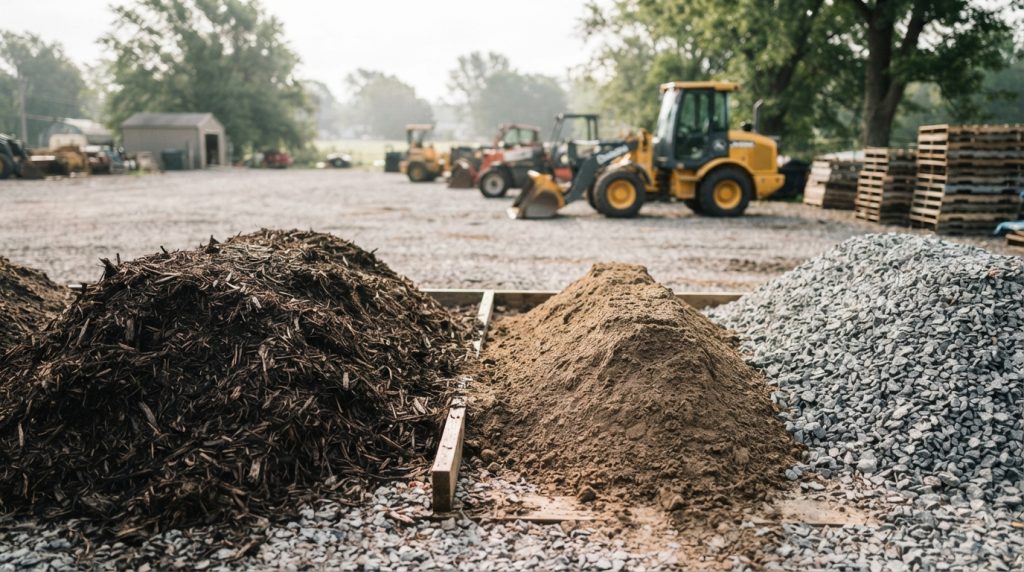
Selecting the right mix of materials for a yard starts with understanding what each product does: topsoil builds a growing base, mulch regulates moisture and temperature, and decorative stone or aggregate manages drainage and erosion. Matching these materials to soil conditions and project goals is the most direct way to support healthy plant growth and a durable outdoor layout.
Homeowners researching landscape supplies often begin with a single project, such as refreshing garden beds or regrading a slope, then discover that soil quality and drainage affect every later decision. Getting the foundation right before planting or installing hardscape features tends to reduce the need for repeat work later in the season.
Not every landscape task calls for the same product. A short list of common supplies and their typical uses helps narrow the choice:
Depth and placement matter as much as material choice. According to UConn Extension guidance on mulch basics, a mulch layer should be no more than 1 to 3 inches thick, and mulch should not be placed directly against plant crowns or tree bases, since contact with stems or trunks can favor diseases like crown rot.
Yards in Cheshire, CT often include a mix of clay-heavy and rocky subsoil typical of central Connecticut, which affects how quickly water drains after rain. Testing soil before adding amendments gives a clearer picture of what a bed actually needs rather than guessing at fertility or pH. UConn Extension’s integrated pest management program notes that a soil test should be performed when renovating landscapes or when analyzing problems, and recommends using organic amendments such as compost, compost tea, or leaf mulch to build soil organic matter and improve soil health.
Seasonal timing also plays a role. Replenishing mulch on a yearly or biannual basis helps keep weed pressure down, since replenishing the mulch layer in landscape beds every 1 to 3 years helps prevent germination of seeds that may contaminate the mulch surface. Reputably sourced material matters too, since poor-quality fill or mulch can introduce weed seed or invasive plant material into an otherwise healthy bed.
| Material | Primary Use | Typical Depth | Maintenance Interval |
| Topsoil | Bed building, grading | Varies by project | As needed per project |
| Mulch (bark/wood chip) | Moisture retention, weed suppression | 1-3 inches | Replenish every 1-3 years |
| Decorative stone | Low-maintenance ground cover, drainage | 2-3 inches | Minimal, occasional refresh |
| Aggregate/fill | Base layer under hardscape | Project-dependent | Rarely replaced |
This table reflects general practice rather than a fixed formula; exact depth and quantity depend on the size of the area, existing soil, and the plants or hardscape involved.
A short planning sequence helps avoid ordering the wrong quantity or type of material:
Skipping the measurement step is one of the more common reasons homeowners end up with leftover material or a second delivery order.
How much mulch does a typical garden bed need? Coverage depends on bed size and desired depth, but a standard cubic yard covers roughly 100 to 160 square feet at a 2 to 3 inch depth, consistent with the depth range UConn Extension recommends for most landscape beds.
Can decorative stone replace mulch in every bed? Stone works well for low-maintenance or drainage-focused areas but does not break down into organic matter the way mulch does, so beds that rely on improving soil fertility over time generally benefit more from organic mulch.
How often should topsoil be refreshed in Cheshire, CT? There is no fixed schedule; topsoil is typically added only when starting a new bed, correcting grading, or when a soil test indicates the existing soil lacks sufficient organic content.
Does the time of year affect when to order landscape supplies? Spring and fall are common windows for mulch and topsoil delivery in Connecticut, since planting activity and bed preparation tend to concentrate in those seasons, though material can generally be ordered whenever a project is ready.
Modern Materials Corporation, based in Hamden, CT, serves customers across Cheshire, CT with recycled and natural landscaping materials. The business operates as a recycling facility and material supplier rather than a retail storefront, which is relevant for anyone planning a delivery-based project.
Additional published details on service area and material options for the region are available through Read More About Modern Materials Corporation.
Keep reading
Key point: • Shifting, cracking, and weed growth in paver patios usually trace back to poor base preparation...
Read article →
First impressions matter, especially when it comes to your home. The exterior of your property sets the stage...
Read article →
A beautiful, well-kept yard is more than just a source of pride-it’s an investment in your home’s value...
Read article →