What Every Homeowner Should Know About Septic Tank Service
Quick summary: A septic tank holds and partially treats wastewater from a home before it filters into a...
Read article →Home / Plumbing and Plumbers / Article
Quick take:
• Most households should schedule septic tank pumping every three to five years, with household size and tank capacity shifting the exact timing.
• Warning signs like slow drains, gurgling pipes, or wet patches in the yard mean service should not wait for the calendar.
• Local, GA state-certified technicians can inspect tank and drain-field condition during a routine pump-out to catch problems early.
A septic tank that goes too long without pumping risks sending solids into the drain field, where they can cause clogs and costly repairs. Scheduling Septic System Pumping on a predictable interval is the simplest way to avoid that outcome and keep a system working as designed.
Homeowners in Jackson and Madison County often ask how to know when it is time to call a crew out. The short answer is that timing depends on tank size, household size, and daily water use, but a few practical signals make the decision easier.
Septic tanks separate solids from wastewater before the liquid moves into the drain field for final treatment. When sludge and scum accumulate past a safe level, solids can escape into the drain-field lines and clog the soil absorption area.
That kind of damage is expensive and sometimes irreversible, since a saturated drain field often requires full replacement rather than a simple repair. The U.S. EPA recommends pumping your septic tank every three to five years, though your exact schedule depends on household size, tank capacity, and daily water usage. For official guidance on maintaining a residential system, the EPA’s homeowner septic system resources outline the same baseline interval and explain what routine care should include.
Tank size and occupancy change that baseline considerably. A larger tank serving fewer people can often stretch the interval, while a smaller tank in a busy household needs more frequent attention.
A workable schedule starts with knowing the basics about the system already installed on the property.
• Confirm tank size and install date, since older or smaller tanks fill faster.
• Count daily occupants and note whether a garbage disposal is in regular use, since both increase solids load.
• Track water-using habits like laundry frequency and multi-bathroom use during peak times.
• Request a sludge-level check during any inspection, which gives a more precise answer than a generic calendar reminder.
| Household Size | Typical Tank Size | General Pumping Guidance |
| 1-2 people | 1,000-1,500 gallons | Longer end of the 3-5 year range |
| 3-4 people | 1,000 gallons | Closer to 3 years |
| 5+ people or heavy use | 1,000-1,500 gallons | Every 2-3 years, check sooner if signs appear |
This table reflects general EPA-based guidance and is not a substitute for a site-specific inspection.
Even a well-planned schedule should bend to real conditions on the property. Certain signs point to a tank that needs attention sooner than the calendar suggests.
1. Slow drains or gurgling sounds from sinks, tubs, or toilets.
2. Standing water or unusually lush, soggy patches over the drain field.
3. Sewage odors near the tank lid or in the yard.
4. A toilet that will not flush properly or backs up repeatedly.
Any of these symptoms justifies a call for an inspection rather than waiting out the rest of a planned interval. Catching the problem early typically costs far less than dealing with a failed drain field later.
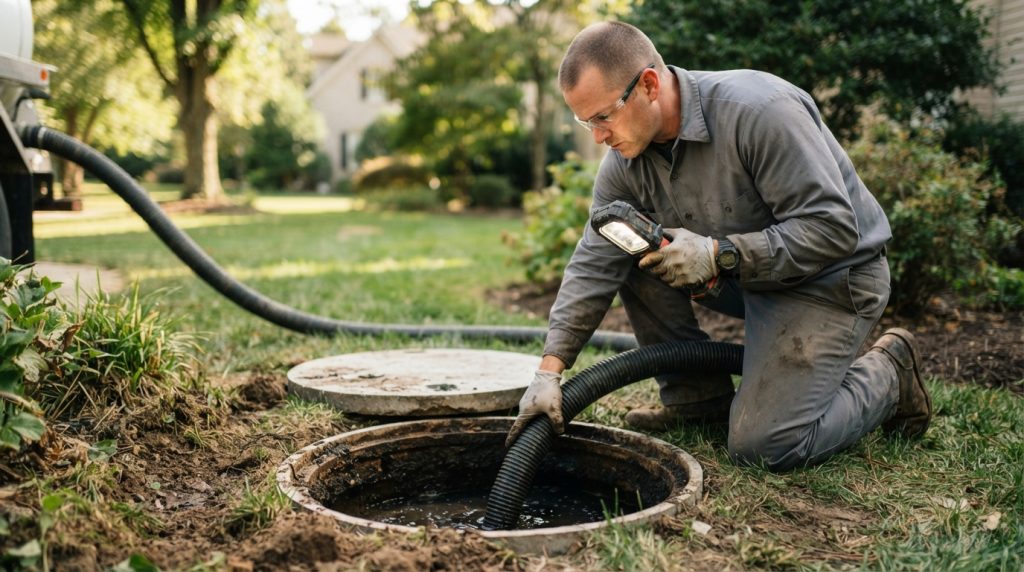
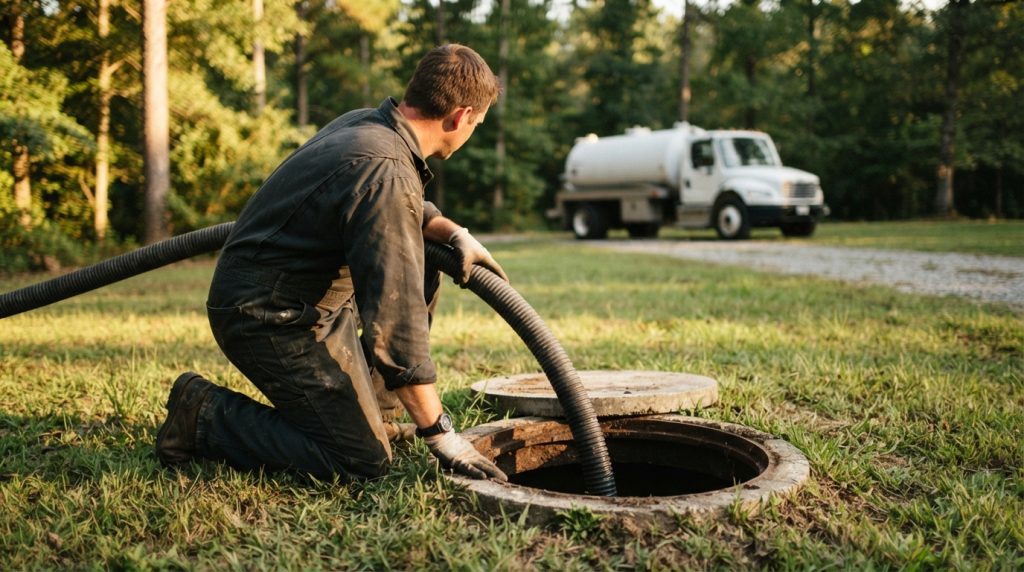
A thorough pump-out visit involves more than emptying the tank. Technicians typically locate and uncover the tank, measure sludge and scum layers, pump the contents, and dispose of waste according to state regulations.
A conscientious crew will also look for cracks, root intrusion, or baffle damage while the tank is open. Our team inspects, pumps, and disposes of waste safely and legally. We also check for early warning signs of system failure. That extra step during a routine visit often catches small issues before they become expensive ones.
In Commerce and the surrounding Jackson and Madison County area, Visit Price’s Septic Tank Service has built its business around family-operated, GA state-certified service. Shane Price is the third generation of Price’s Septic Tank Service and a GA certified septic pumper and installer. That continuity matters for homeowners who want a technician familiar with local soil and system types.
Common to the region.
How do I know what size my septic tank is? Tank size is usually recorded on the original permit filed with the county health department, or a technician can measure it during an inspection visit.
Does a garbage disposal really change the pumping schedule? Yes. Disposals add significantly more solid waste to the tank, which is one of the key variables the EPA guidance points to when adjusting the standard three-to-five-year interval.
Is it normal for grass to be greener over the drain field? Mildly greener grass can be normal, but soggy ground, strong odors, or standing water over the drain field can signal a system that needs prompt attention.
Can I pump the tank myself to save money? No. Septic pumping requires licensed equipment and proper waste disposal under state rules, so certified professionals handle the work, not homeowners.
Keeping a septic system on a sensible pumping schedule protects both the property and the investment already made in the drain field. Watching for warning signs between visits, understanding how household size affects timing, and working with a locally certified crew for each pump-out are the most reliable ways to avoid an expensive failure down the road.
Keep reading
Quick summary: A septic tank holds and partially treats wastewater from a home before it filters into a...
Read article →
When temperatures fluctuate throughout the year, homeowners in Shrewsbury know how vital a reliable HVAC system is for...
Read article →
Maintaining your home’s value involves more than curb appeal and interior upgrades; it also requires a well-functioning plumbing...
Read article →