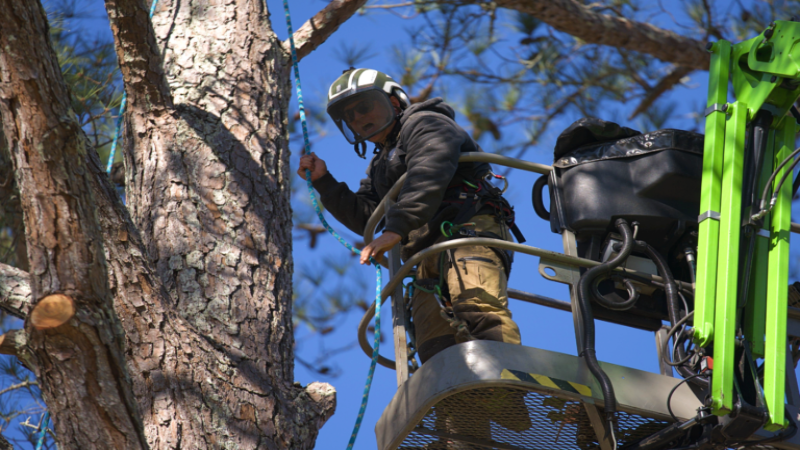
Boost Home Value and Safety with Professional Tree Trimming in Milner, GA
A well-maintained landscape does more than just beautify your property; it can significantly enhance both the value and...
Read article →Home / Tree Service / Article
In short:
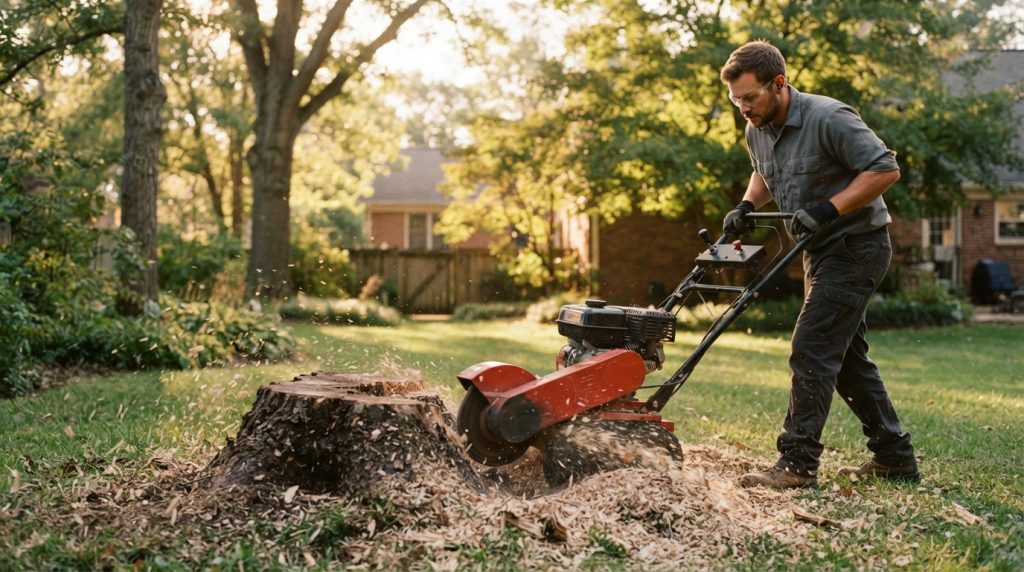
• Stump grinding uses a cutting wheel to reduce the stump to chips, usually leaving much of the root system underground.
• Grinding depth, access, stump size, and cleanup requirements affect the job and its cost.
• Confirm utility locating, chip removal, backfilling, and plans for the area before work begins.
A stump can get in the way of mowing, walking, or a landscaping project after a tree is removed. Grinding reduces the visible stump without excavating the entire root ball. It leaves underground material behind, so the best approach depends on what you want to do with the space.
Ron’s Tree Services offers stump grinding and removal in Santa Rosa Beach, FL. Ask about access, the proposed grinding depth, and the condition in which the site will be left.
What Happens During Stump Grinding
A stump grinder uses a rotating cutting wheel to chip away wood in controlled passes. The operator works to an agreed depth and area; the process does not normally remove the entire root system.
The general sequence looks like this:
1. Assess machine access, nearby structures, and utilities before preparing the work area.
2. The grinder is positioned and lowered onto the stump in controlled passes.
3. Grinding continues until the stump is reduced below the soil line.
4. Manage the chips and resulting hole according to the agreed cleanup and backfill scope.
There is no single grinding depth for every job. Discuss lawn restoration, planting, or construction plans with the contractor in advance. Buried utilities and site conditions may limit where or how deeply grinding can proceed.
Why Roots Are Left Behind
Many roots remain underground after grinding and decay over time. This usually requires less excavation than removing the root ball, but nearby irrigation, private wiring, and other buried features still need to be identified and protected.
Some tree species can produce new shoots from remaining roots. Ask about the likelihood for the tree involved and how any regrowth should be managed. Grinding does not guarantee that all roots are dead or removed.
Why Stump Removal Matters for a Yard
Removing the exposed stump can make a yard easier to use. Common reasons to consider grinding include:
• Easier mowing around the former tree location.
• Removing a visible obstruction that people could trip over.
• Making room for landscaping while recognizing that roots and wood debris remain below the surface.
• Preparing the area for further assessment when a project requires deeper excavation or a specific foundation.
If the tree was removed because of disease, ask an arborist whether infected roots or other site conditions need attention. Grinding alone should not be treated as disease control or a guarantee against pests.
Stump Grinding vs Full Stump Removal
|
Factor |
Stump grinding |
Root ball excavation |
|---|---|---|
|
Material removed |
Stump and agreed surface roots |
Stump and major root ball; some roots may remain |
|
Work involved |
Cutting wood with a grinder |
Digging and handling excavated material |
|
Ground disturbance |
Usually less excavation |
Typically a larger hole and more soil disturbance |
|
Future site use |
May suit lawn restoration after cleanup |
May be needed where deeper clearance is required |
For routine yard cleanup, grinding may be sufficient. Construction or planting in the exact location can require more work to remove wood and prepare the soil. Discuss those plans before choosing the scope.
Frequently Asked Questions
How long does stump grinding take?
Stump diameter, wood condition, access, roots, and cleanup requirements all affect the time. Ask for an estimate based on the actual site.
Are all the roots removed?
No. Grinding generally reduces the stump and selected surface roots while leaving much of the underground root system in place.
What should happen before grinding near utilities?
Arrange utility locating and identify private lines such as irrigation, lighting, or septic components before work. Tell the contractor about known buried features and confirm how they will be protected.
What happens to the wood chips?
They may be left, removed, or handled under a separate cleanup arrangement. Confirm chip removal, soil replacement, and final grading in the estimate. Remaining wood can decay and cause the ground to settle.
Ron’s Tree Services offers stump grinding and removal in the Santa Rosa Beach area. Describe your plans for the site when requesting an estimate so the recommended work matches the intended use.
For published contact and location information, Find Ron’s Tree Services on Google.
Keep reading
A well-maintained landscape does more than just beautify your property; it can significantly enhance both the value and...
Read article →
When severe weather strikes or a tree unexpectedly threatens your property, acting quickly is essential to prevent significant...
Read article →
When a severe storm strikes, the aftermath can leave homeowners facing significant challenges, especially regarding the safety and...
Read article →