Enjoy Stress-Free Backyard Retreats With a Skilled Pool Builder Homeowners Trust
Transforming your backyard into a serene retreat is a dream for many homeowners. A well-designed pool area not...
Read article →Home / Landscaper / Article
Recap:
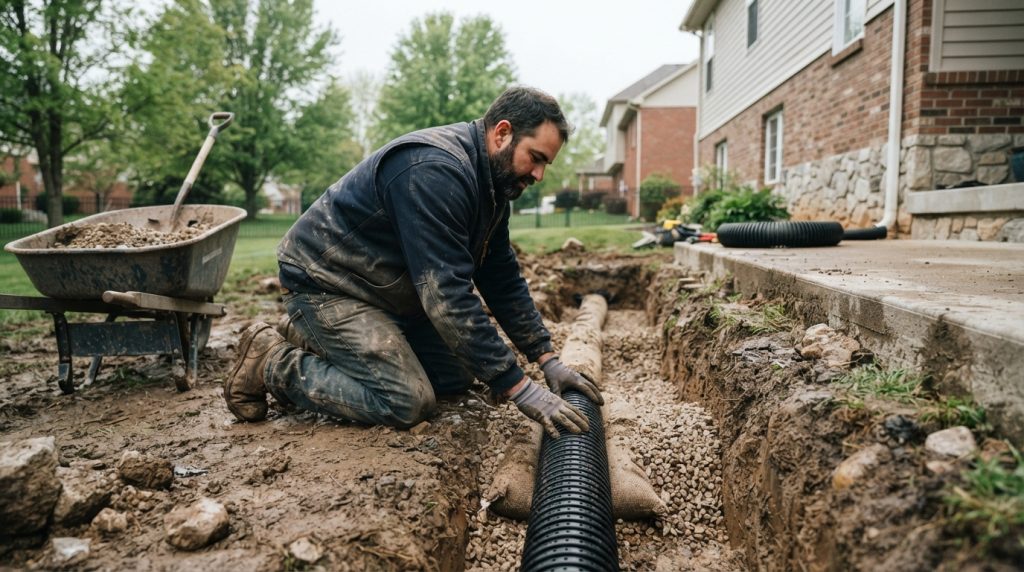
• Drainage contractors install and repair grading, French drains, sump pumps, and related water management systems that protect foundations, basements, and yards from standing water.
• Property owners in Short Hills, NJ often need drainage work because of clay-heavy soils, seasonal storms, and sloped lots that trap runoff near the home.
• Verified services include French drain installation, sump pump connections, grading, rain gardens, and retaining walls, each addressing a different drainage failure point.
Standing water in a yard, a damp basement wall, or soil that never seems to dry out are signs that a property’s drainage system is not managing runoff correctly. Drainage contractors in Short Hills NJ address these conditions by diagnosing where water collects and installing systems such as French drains, grading corrections, or sump pump connections to redirect it safely away from structures.
Water that pools near a foundation does not stay contained. Over time it works into cracks, softens soil beneath walkways, and contributes to erosion that reshapes a yard’s slope. One business operating in this space is Total Maintenance Pro LLC, whose published service list includes drainage solutions alongside grading, retaining walls, and rain garden installation.
Short Hills, NJ sits in an area where seasonal storms and clay-dense soil combine to slow natural water absorption. When soil cannot absorb rainfall quickly, water has nowhere to go but across the surface, often toward a home’s foundation.
Typical warning signs include:
• Pooling water in the yard that lingers for more than a day after rain
• Water entering a basement or crawl space during heavy storms
• Soil erosion along slopes or near downspouts
• Cracked foundation walls linked to prolonged soil saturation
Federal guidance on EPA stormwater management practices notes that sustainable stormwater management focuses on reducing runoff and improving water quality, with practices that help maintain natural hydrologic cycles through site grading, vegetation, soils and natural processes that absorb and filter stormwater onsite. That principle underlies much of the grading and vegetative drainage work used on residential properties.
Drainage work is not a single task but a set of coordinated systems designed to move water away from vulnerable areas.
| Service | Primary Purpose | Common Use Case |
| French drains | Redirect subsurface water | Chronic yard flooding, basement seepage |
| Grading | Correct slope so water flows away from structures | Flat or inward-sloping lots |
| Sump pump connections | Remove collected water from low points | Basements prone to flooding |
| Rain gardens | Absorb and filter runoff naturally | Properties seeking eco-friendly drainage |
Each solution targets a different failure point. A sloped lot may only need regrading, while a home with a consistently wet basement often requires a French drain paired with a sump pump connection to actively remove water rather than simply redirect it.
Addressing drainage early reduces the likelihood of larger structural repairs later. Saturated soil around a foundation can lead to settling, cracked walls, and compromised landscaping that takes years to fully repair.
Grading and swale systems also play a role in managing runoff responsibly. According to the EPA, swales are drainage paths or vegetated channels used to transport water, and they can be used in small drainage areas with low runoff instead of underground storm sewers, helping slow runoff and facilitate infiltration. This kind of layered approach, combining surface correction with subsurface or vegetative systems, tends to hold up better through multiple storm seasons than a single fix applied in isolation.
Based in USA, Total Maintenance Pro LLC’s published service area extends to Short Hills, NJ and several surrounding New Jersey communities. The business does not maintain a location or office within Short Hills, NJ itself; work is carried out on-site at client properties.
How do I know if my property needs a drainage system?
Answer: Persistent puddles, water seeping into a basement, or visible erosion after rainfall are common indicators that existing drainage is insufficient for the lot’s slope and soil type.
What is the difference between a French drain and grading?
Answer: Grading adjusts the slope of the land so water flows away naturally, while a French drain is a buried pipe system that collects and redirects water that grading alone cannot manage.
Can drainage problems affect a home’s foundation?
Answer: Yes. Prolonged water exposure near a foundation can soften soil, increase hydrostatic pressure against walls, and contribute to cracking over time.
Is a consultation typically required before drainage work begins?
Answer: Most drainage projects start with a site evaluation to identify where water collects and which combination of solutions, such as grading, French drains, or sump pumps, fits the property’s specific conditions.
Drainage issues rarely resolve on their own, and a brief property assessment is often the clearest way to understand which corrective steps apply to a specific lot. Published details for Total Maintenance Pro LLC cover the service area referenced in this article.
Keep reading
Transforming your backyard into a serene retreat is a dream for many homeowners. A well-designed pool area not...
Read article →
A well-maintained landscape can be the difference between an ordinary property and one that stands out in both...
Read article →
Transforming a backyard into a beautiful and functional outdoor living space is a dream for many homeowners. With...
Read article →