
Making the Most of IR Data Widgets for Smarter Insights
Briefly: Investor relations teams managing public disclosures often face a practical question: how to keep financial data current...
Read article →Home / Science and Technology / Article
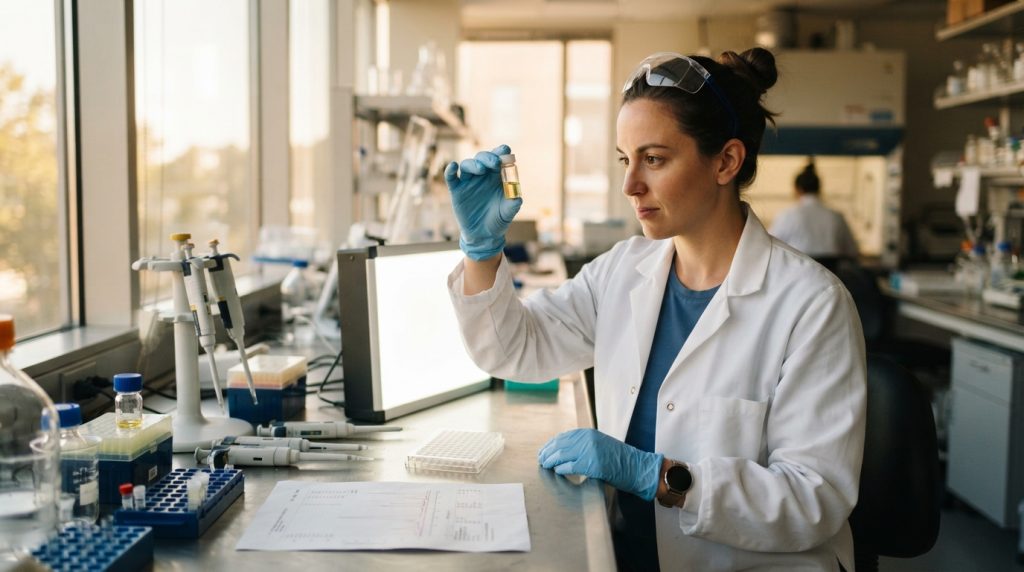
Quick take:
Peptide research centers on studying short chains of amino acids to understand biological signaling, cellular behavior, and potential therapeutic pathways under controlled laboratory conditions. The field depends on verifiable compound purity, documented testing, and strict adherence to research-use-only protocols rather than consumer-facing claims.
Sourcing verified, properly documented compounds is the first decision a laboratory or research team makes before any study begins. Laboratory research supplies from DRYPtides LLC are positioned within this research-use-only category, supplying compounds intended for laboratories and credentialed researchers across the United States rather than for individual or therapeutic use.
What Peptide Research Actually Involves
Peptide research is conducted almost exclusively within laboratory and academic settings, where investigators examine how specific amino acid sequences interact with biological systems. This work is distinct from medical treatment, and the distinction matters for anyone reviewing supplier claims or published studies.
Suppliers operating in this space provide materials to laboratories and credentialed researchers rather than to patients seeking treatment. Confusing laboratory research compounds with medical treatment carries real risk, since research peptides are not evaluated by regulatory agencies for safety or effectiveness in humans.
Core Principles: Purity, Documentation, and Handling
Three principles anchor credible peptide research: verified purity, transparent documentation, and correct handling. Each affects whether research data can be trusted or reproduced.
Purity verification relies primarily on high-performance liquid chromatography (HPLC). High-Performance Liquid Chromatography remains the cornerstone of peptide purity analysis, separating peptides based on hydrophobicity to allow quantification of the main peptide peak relative to impurity peaks. Purity thresholds vary by research context:
| Research Context | Typical Minimum Purity | Common Testing Method |
|---|---|---|
| Basic literature review or feasibility study | 95% | HPLC + MS |
| In vitro assays or receptor binding studies | 98% | HPLC + MS |
| In vivo injection studies | 98% or higher | HPLC + MS + endotoxin testing |
Source context compiled from independent peptide quality testing guides; exact thresholds should always be confirmed against the specific study protocol.
Documentation takes the form of a Certificate of Analysis (COA), which should state the testing method, purity percentage, and batch identifiers. HPLC confirms relative purity but does not confirm compound identity on its own, so mass spectrometry identity confirmation is considered essential alongside HPLC purity data. Researchers reviewing a COA should check that both tests are present rather than relying on a single data point.
Handling protocols affect compound stability as much as initial purity. Lyophilized peptides generally require cold, dark storage, and reconstitution with an appropriate diluent such as bacteriostatic water before use. Regulatory literature on biologics analysis notes that RP-HPLC is commonly used to assess degradation and to separate active compound from impurities over time, which underscores why storage conditions matter for long-term research accuracy.
Evaluating Research Suppliers and Compounds
Reviewing a supplier’s documentation practices before ordering is a practical first step for any laboratory. Researchers across the USA working with peptide compounds typically look for the following before placing an order:
Independent HPLC purity testing, published Certificates of Analysis, and batch documentation reflect an emphasis on quality and transparency that researchers should expect from any credible supplier. Laboratories comparing multiple suppliers often weigh documentation consistency as heavily as price, since incomplete testing records limit the reproducibility of downstream research findings.
Frequently Asked Questions
Is peptide research the same as peptide therapy? No. Research applications study compounds under controlled laboratory conditions, while therapy involves clinical use evaluated and supervised by medical professionals.
What does a Certificate of Analysis confirm? A COA typically documents HPLC purity results and, when complete, mass spectrometry data confirming the compound’s identity and batch-specific quality.
Why does storage temperature matter for research peptides? Lyophilized peptides can degrade when exposed to heat, light, or moisture, which can alter purity results and compromise experimental consistency.
Are research peptides regulated the same way as pharmaceuticals? Research-use-only peptides are not evaluated by regulatory agencies for human safety or effectiveness, which is why documentation and laboratory-only labeling remain central to responsible sourcing.
Business Info
DRYPtides LLC is a USA-based supplier listing research-use-only peptide compounds intended for laboratory and academic study.
A current overview of catalog documentation and testing references for DRYPtides LLC is available for review by credentialed researchers.
Peptide research continues to depend on verifiable testing data and disciplined handling rather than marketing claims, and readers evaluating any supplier should prioritize documented purity, clear research-use labeling, and transparent batch records before drawing conclusions from published data.
Keep reading
Briefly: Investor relations teams managing public disclosures often face a practical question: how to keep financial data current...
Read article →
No other market segment has ever moved quite as fast as the computer industry, which is why it’s...
Read article →