
How Custom Interior Doors Add Value and Character to Your Home
Interior doors are often overlooked when it comes to home design, but they can significantly impact the overall...
Read article →Home / Door supplier / Article
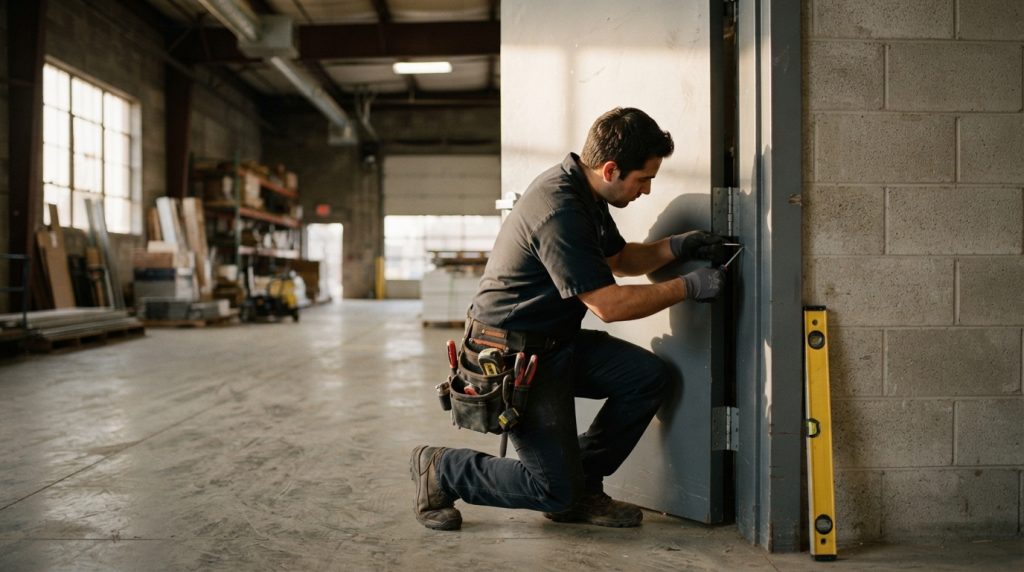
• Hollow metal doors are steel-faced door assemblies used widely in commercial, industrial, and institutional buildings for durability and fire protection.
• Fire-rated versions are tested under recognized standards and are typically rated from 20 minutes up to 3 hours depending on wall assembly requirements.
• Both fire-rated and non fire-rated configurations are available, with installation scoped to meet applicable building codes.
A hollow metal door is a steel door and frame assembly built for commercial and institutional buildings that need a durable, code-compliant opening. These doors pair a rigid steel face with an internal core, making them a standard choice where security, fire separation, and daily wear resistance matter more than appearance alone.
For facility managers and property owners in Commerce, CA, understanding what a Hollow Metal Door offers can clarify whether it fits a specific building’s code requirements. R & S Overhead Doors Of Commerce, Inc lists hollow metal doors among its product lines, noting that these assemblies serve commercial, industrial, and institutional construction projects.
Hollow metal doors are built around a steel shell, which gives them several practical advantages over wood or aluminum alternatives in demanding settings.
• Structural durability : The steel construction resists dents, warping, and daily impact better than most wood doors.
• Fire resistance : Many configurations are tested and labeled for fire protection, a feature wood doors generally cannot match at higher ratings.
• Security : Solid steel construction resists forced entry more effectively than hollow-core wood doors.
• Code compliance : Standard sizing and labeling make it easier to meet building and fire code requirements during inspections.
These features explain why architects and contractors continue to specify hollow metal assemblies for warehouses, schools, offices, and industrial facilities rather than lighter-duty alternatives.
Fire protection is one of the most cited reasons hollow metal doors remain an industry standard. According to the Steel Door Institute, fire doors must meet International Building Code and International Fire Code requirements along with NFPA 80, the standard governing installation, inspection, and maintenance of fire door assemblies.
Fire-rated hollow metal doors are generally available in a range of protection levels:
|
Fire Rating |
Typical Application |
|
20 minutes |
Corridor and smoke partition doors |
|
45-60 minutes |
Interior fire separations |
|
90 minutes |
Exit enclosures, stairwells |
|
180 minutes (3 hour) |
High-hazard area separations |
Because the required rating depends on the fire-resistance rating of the surrounding wall, a door’s label alone does not guarantee code compliance; the frame, hardware, and wall assembly must all align. Businesses selecting hollow metal doors for Commerce, CA properties should confirm that both fire-rated and non fire-rated configurations match the intended application before installation begins.
Hollow metal doors are typically manufactured from cold-rolled or galvanized steel, with face sheet gauges that affect both weight and durability. Thicker gauges generally suit high-traffic or security-sensitive openings, while lighter gauges may be adequate for interior partitions with lower exposure to impact.
Several factors influence how a hollow metal door performs after installation:
1. Frame type : Knock-down, welded, or drywall frames each suit different wall constructions.
2. Hardware preparation : Hinges, closers, and panic hardware must be compatible with the door’s fire rating if applicable.
3. Clearances : Fire-rated assemblies have specific clearance limits at the head, jambs, and bottom of the door under NFPA 80.
4. Finish : Factory-primed or powder-coated finishes affect corrosion resistance in exterior or high-humidity settings.
Proper installation also matters as much as the product specification itself. Fast, professional installation that accounts for building code requirements reduces the risk of failed inspections or rework later.
Are hollow metal doors suitable for exterior use? Many hollow metal doors are manufactured with galvanized steel finishes suited to exterior exposure, though the specific finish and gauge should match the climate and traffic conditions of the installation site.
How long do fire-rated hollow metal doors last? Fire ratings do not expire with age, but doors must remain free of unauthorized field modifications and damaged clearances to keep their listed rating valid under NFPA 80.
Can hollow metal doors be installed in existing openings? Yes, replacement hollow metal door and frame systems are commonly fitted into existing rough openings, provided the opening dimensions and wall type are compatible with the frame style selected.
Is a fire-rated door always required? Not always. Fire-rated doors are required only in specific locations defined by code, such as exit enclosures and hazardous area separations, while other interior openings may use non fire-rated hollow metal doors.
Commercial and institutional buildings across the service area rely on steel door assemblies that balance durability, security, and code compliance. Based in USA, R & S Overhead Doors Of Commerce, Inc serves facility owners and property managers across Commerce, CA who require properly specified door and frame systems for their buildings.
Published specifications for R & S Overhead Doors Of Commerce, Inc outline fire-rated and non fire-rated hollow metal door options for commercial applications.
Keep reading
Interior doors are often overlooked when it comes to home design, but they can significantly impact the overall...
Read article →
When it comes to protecting your commercial property, a robust security system is essential. Beyond surveillance cameras and...
Read article →Homeowners across the United States are upgrading entryways with materials that deliver both performance and design flexibility. As...
Read article →