Why Choosing a Commercial Locksmith Newport News, VA Enhances Workplace Security
Securing your workplace is a top priority for businesses of all sizes, especially in a fast-growing city like...
Read article →Home / Security Systems and Services / Article
Essentially:
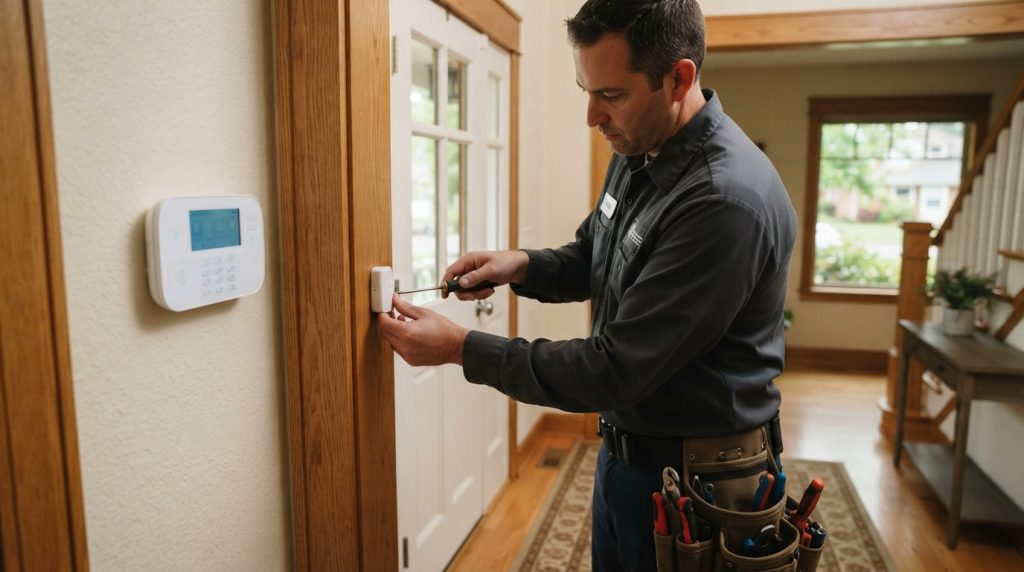
A qualified House Security System Installer combines electrical skill, product knowledge, and monitoring-system setup to protect a home against intrusion, fire, and other emergencies. These professionals assess a property’s layout, install sensors and cameras, and connect the system to a monitoring center so alerts reach homeowners and first responders quickly.
Residential burglary remains a measurable risk across the country, which is part of why professional installation matters. Recent FBI data compiled through the Bureau of Justice Statistics crime reporting program shows burglary rates have continued a long-term decline, a trend researchers link in part to wider adoption of monitored security equipment.
Core Skills a Qualified Installer Brings
Installing a home security system involves more than mounting a few sensors. Trained technicians draw on several technical disciplines to make sure equipment functions correctly and holds up over time.
These skills matter in older housing stock common around Pittsburgh, PA, where wiring layouts and construction materials can vary significantly from newer builds.
Services Typically Included in a Home Installation
Most residential security projects bundle several related services rather than a single piece of equipment. A typical scope of work includes:
| Service Component | Primary Purpose | Typical Installation Point |
|---|---|---|
| Door/window sensors | Detect forced entry | Exterior doors, ground-floor windows |
| Video cameras/DVR | Record and monitor activity | Entryways, driveways, common areas |
| Access control/keypads | Manage who can arm or disarm the system | Main entry points |
| 24/7 monitoring connection | Alert monitoring center and responders | Control panel or cellular module |
What to Look for When Comparing Installers
Homeowners researching options should weigh a few practical factors before committing to a provider.
Local climate and housing patterns in Pittsburgh, PA, including older brick homes and seasonal weather events, can influence sensor placement and equipment choices, which is why a property-specific assessment is generally preferable to a one-size-fits-all package.
Frequently Asked Questions
Do home security installers only work with new construction? No. Most residential installation work takes place in existing homes, where technicians adapt wiring and sensor placement to the property’s existing layout.
Is professional monitoring required after installation? Monitoring is optional with most systems, though connecting the system to a staffed monitoring center allows alerts to reach a response team even when homeowners are unavailable.
Can a security system integrate with existing smart home devices? Many modern systems are designed to connect with smart locks, lighting, and mobile apps, though compatibility depends on the specific equipment and platform used.
How long does a typical residential installation take? Installation timelines vary based on home size and the number of components involved, ranging from a few hours for a basic setup to a full day for larger properties with multiple cameras and access points.
Business Information and Next Steps
Based in McKeesport, PA, Barrier Protection Systems Inc serves customers across Pittsburgh, PA with electronic security and alarm monitoring work.
Published details for Learn More About Barrier Protection Systems Inc cover residential security system installation in the local service area.
Keep reading
Securing your workplace is a top priority for businesses of all sizes, especially in a fast-growing city like...
Read article →
In a bustling city like Las Vegas, NV, professional security services are more important than ever. A corporate...
Read article →
Whether you need a security guard for a special event or to guard your cannabis store on a...
Read article →