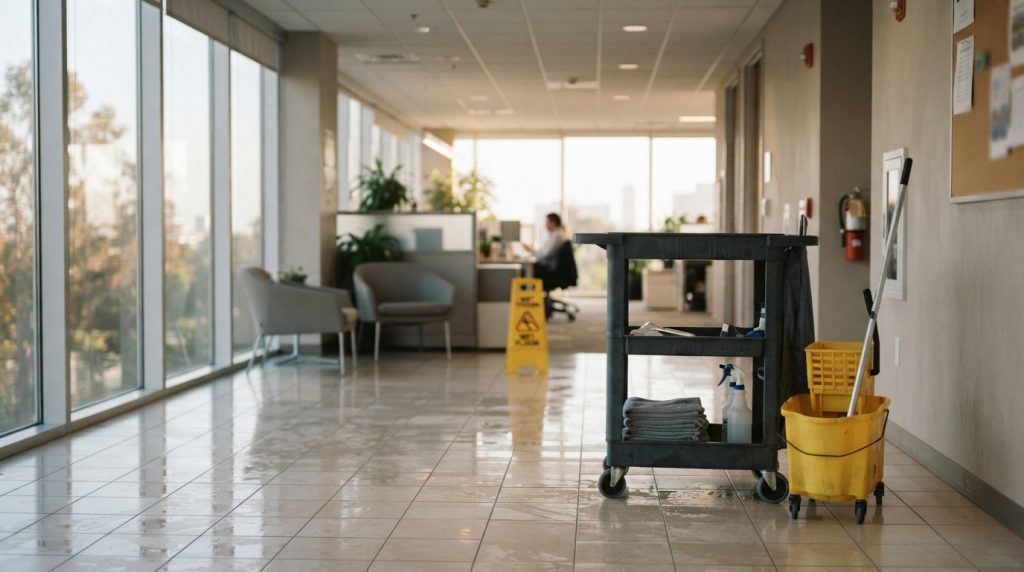
How Commercial Cleaning Services Keep Workplaces Safe and Productive
Short version: Routine professional cleaning reduces germ spread, allergens, and clutter that slow down daily operations. Office janitorial...
Read article →Home / Cleaning Service / Article
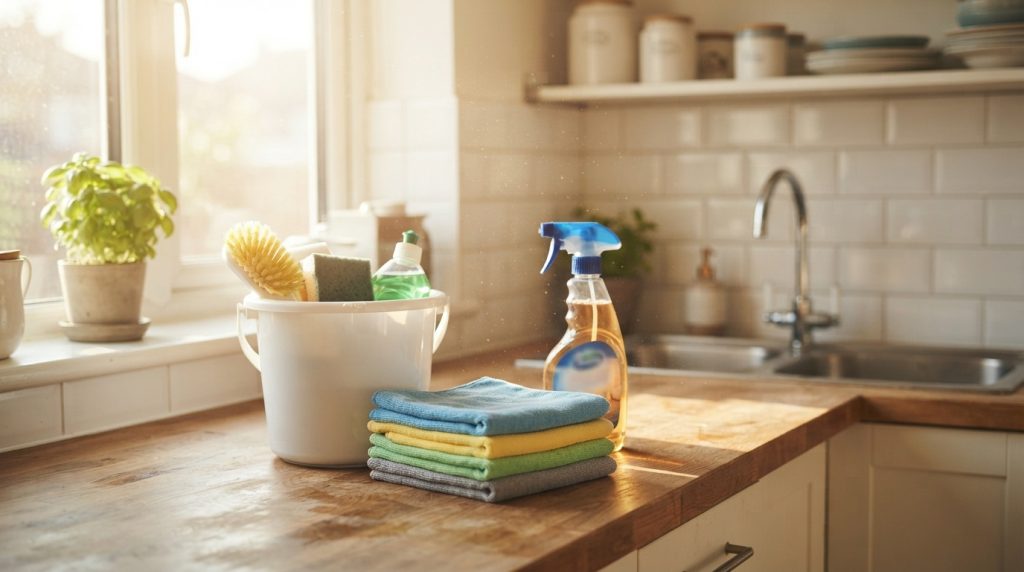
Quick take:
Deep cleaning means a thorough, top-to-bottom reset of a home that goes beyond surface tidying to address buildup in places normal cleaning routines miss. It covers baseboards, inside appliances, grout lines, light fixtures, and vents, areas that accumulate grime over weeks or months rather than days.
Most households benefit from this type of reset a few times a year rather than weekly, since it addresses buildup that daily habits cannot reach. House cleaning that follows a structured, room-by-room method tends to produce more consistent results than tackling random tasks as they come to mind. Starting with a clear plan also reduces the chance of missing high-traffic zones like entryways and kitchens, where dirt concentrates fastest.
Cleaning without a sequence often means redoing work, since dust knocked loose from a ceiling fan can resettle on a freshly wiped counter below. Working from top to bottom and from the farthest corner of a room toward the exit avoids this problem entirely.
A practical order looks like this:
This sequence keeps debris moving downward and outward instead of being spread across already-cleaned surfaces.
Kitchens and bathrooms usually need the most attention because grease, soap scum, and moisture build up faster there than anywhere else in the home. A focused pass through these rooms should include:
For bedrooms and living areas, attention should shift toward dust-trapping fabrics and overlooked storage spaces:
Readers in Fort Worth, TX often deal with a particular combination of seasonal pollen, red clay dust tracked indoors, and the type of ductwork common in older housing stock, all of which settle into carpets and vents faster than in milder climates. Checking HVAC filters and vent covers during a deep clean addresses this buildup directly rather than letting it recirculate through the home.
Not every cleaning product is appropriate for every surface, and mixing certain chemicals can create hazardous fumes rather than better results. Households that prefer to limit harsh chemical exposure can reference the EPA Safer Choice program, which lists products evaluated for reduced risk to people and the environment while maintaining cleaning performance.
| Cleaning Approach | Best For | Limitation |
| All-purpose spray | Daily wipe-downs, light grime | Not strong enough for heavy grease or mineral buildup |
| Enzyme-based cleaner | Pet stains, organic residue | Slower acting, needs dwell time |
| Disinfecting wipes | High-touch surfaces like switches and handles | Not designed for large surface areas |
| Degreaser | Kitchen stovetops, range hoods | Can damage certain finishes if left too long |
Matching the product to the surface and the type of buildup prevents both wasted effort and accidental surface damage.
How often should a home get a deep clean? Most homes benefit from a full deep clean two to four times a year, with lighter touch-ups in between depending on household size, pets, and allergy sensitivity.
What is the difference between regular cleaning and deep cleaning? Regular cleaning handles daily maintenance like dishes, countertops, and floors, while deep cleaning reaches areas such as grout, vents, and appliance interiors that accumulate buildup over longer periods.
Can deep cleaning help with allergies? Removing dust, pollen, and pet dander from vents, carpets, and fabric surfaces can reduce allergen exposure, though individuals with severe allergies should also consult a healthcare provider for broader guidance.
Is it necessary to deep clean before moving into a new home? Cleaning an empty space before move-in addresses buildup left by previous occupants and gives a fresh starting point before furniture arrives.
Cowtown Maids is based in USA and serves customers across Fort Worth, TX, with identity and location details published through its Google Business Profile.
A current listing of service area information is available through Contact Cowtown Maids, which covers the surrounding Fort Worth, TX region.
Keep reading
Short version: Routine professional cleaning reduces germ spread, allergens, and clutter that slow down daily operations. Office janitorial...
Read article →
Summary first: • House Cleaning for move-in and move-out situations focuses on deep-cleaning kitchens, bathrooms, floors, and baseboards...
Read article →
For many busy families, keeping a home spotless can feel like an ongoing challenge. Between work commitments, school...
Read article →