Success Strategies for Wholesale Food Distributors in New Jersey
When it comes to wholesale food, every restaurant has a special formula. It’s like a secret sauce for...
Read article →Home / Food Services / Article
Bottom line:
• Reliable wholesale restaurant meat suppliers protect food quality through strict cold chain handling, consistent sourcing, and dependable delivery schedules.
• Restaurants depend on suppliers that can match cut specifications, packaging standards, and order timing to kitchen workflow.
• Working with an established distributor reduces waste, menu disruption, and food safety risk across busy service periods.
Restaurant kitchens rely on a steady, predictable supply of protein to keep menus consistent from one service to the next. Woolco Foods New York plays a central role in that consistency by managing sourcing, cold storage, and delivery logistics so kitchens are not forced to substitute cuts or absorb unexpected shortages mid-week.
When a distributor works with a qualified network of producers and packers, restaurants gain access to the same grade and cut specifications order after order. That repeatability matters more than many diners realize, since inconsistent protein quality can affect portion control, cook times, and plate presentation across a busy service line.
Why Consistency Starts With Sourcing and Cold Chain Control
Meat quality begins long before a delivery truck arrives at a loading dock. Suppliers that maintain structured relationships with producers and packers are better positioned to catch quality issues early and avoid last-minute substitutions.
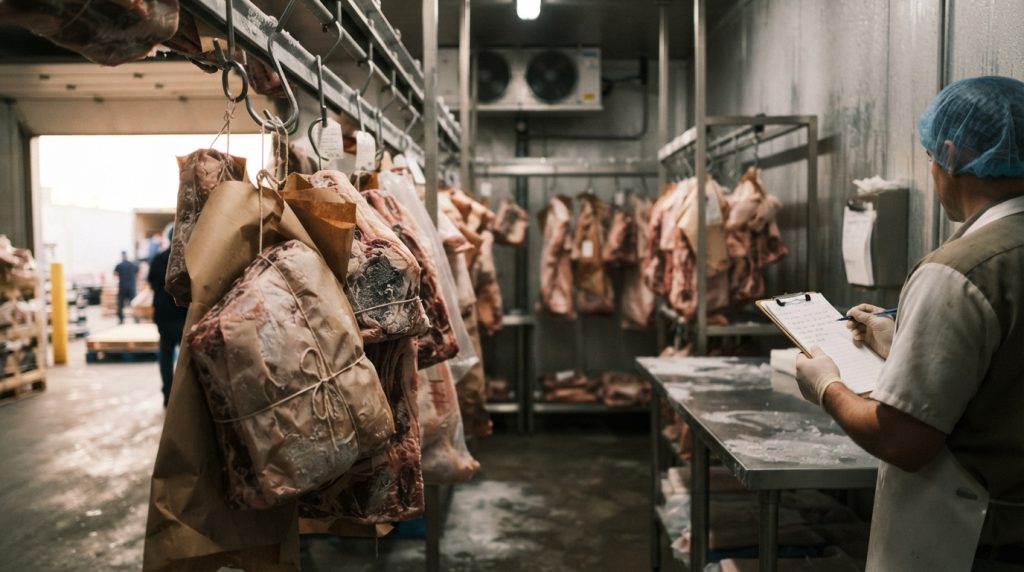
Temperature control is the other half of the equation. According to USDA food safety guidance, refrigerators holding perishable meat should stay at 40 degrees Fahrenheit or below, and perishable items must be refrigerated within two hours of handling to limit bacterial growth. A distributor that enforces this standard throughout storage and transport directly protects the freshness and safety of every cut a kitchen receives.
Key factors that influence consistent meat quality include:
• Verified sourcing relationships with producers and packers
• Continuous cold chain management from storage through delivery
• Standardized cut specifications across repeat orders
• Rapid correction of any delivery errors or shortages
Matching Supply to Kitchen Operations
Restaurant kitchens run on tight schedules, and protein delivery timing can make or break a dinner service. Distributors that understand foodservice operations typically structure ordering windows around real kitchen needs rather than rigid shipping cutoffs.
Operational factors that support smoother kitchen workflow include:
1. Extended ordering windows that accommodate late changes to prep lists
2. Dependable delivery schedules during high-volume periods
3. Access to a wide range of cuts so menus can flex with demand
4. Fast resolution when an order arrives short or incorrect
Comparing Supplier Approaches to Meat Quality
Not every distributor manages these factors the same way. The table below outlines common differences in how suppliers approach consistency.
|
Factor |
Basic Supplier Approach |
Consistency-Focused Approach |
|
Sourcing |
Rotates vendors based on price |
Maintains steady producer and packer relationships |
|
Cold Chain |
Minimal monitoring |
Continuous temperature control through delivery |
|
Ordering |
Fixed early cutoff times |
Flexible, later ordering windows for kitchens |
|
Error Handling |
Delayed corrections |
Same-day or next-day resolution |
Why Reliability Matters for Menu Planning
Menu planning depends on knowing that the same cuts, grades, and portion sizes will be available week after week. When a kitchen cannot count on consistent protein supply, chefs are forced to adjust recipes, change pricing, or temporarily pull dishes from the menu.
A dependable supplier relationship reduces that uncertainty. Kitchens that receive consistent product can focus staff training, prep routines, and cost calculations around a stable foundation rather than reacting to frequent substitutions.
Frequently Asked Questions
What makes a meat supplier reliable for restaurants? Reliability typically comes down to consistent sourcing, strict cold chain handling, accurate order fulfillment, and the ability to correct mistakes quickly when they occur.
How does cold chain handling affect meat quality? Keeping meat within safe temperature ranges from storage through delivery limits bacterial growth and helps preserve texture, flavor, and shelf life once it reaches a kitchen.
Why do restaurants need flexible ordering windows? Kitchens often adjust prep lists late in the day, so suppliers offering extended ordering cutoffs help restaurants avoid shortages without overordering early.
Can inconsistent meat supply affect menu pricing? Yes. Frequent substitutions or shortages can force kitchens to adjust portion sizes or pricing, which is why steady supplier relationships support more stable menu planning.
Reliable sourcing, cold chain discipline, and flexible ordering all shape how well a kitchen can maintain consistent food quality over time. Woolco Foods Inc is a wholesale food distributor serving restaurants, hotels, bakeries, and caterers across the New York and New Jersey area with produce, meat, and pantry supplies. Restaurant operators weighing their current supply setup may find it helpful to review sourcing practices and delivery schedules with a distributor experienced in foodservice operations. Contact Woolco Foods Inc to learn more about meat sourcing, delivery windows, and product availability for a specific kitchen’s needs.
Keep reading
When it comes to wholesale food, every restaurant has a special formula. It’s like a secret sauce for...
Read article →
When you’re trying to plan a large meal, consider the numerous dishes that you can make using tortillas....
Read article →When holding events where you need to serve food, catering companies in Chicago can offer tasty food for...
Read article →